
Well, the weather was really wild on Tuesday 3rd and no one should have been walking the Tongariro Crossing, unless they were stupid and doing it under their own steam. Such a shame for those people who only had Tuesday for it. I heard on the news that Windy Welly (Wellington) was even windier than normal with flights and the cross island ferry cancelled owing to gusts of up to 55kmph. The woman reporting on tv live from Wellington harbour was wearing inappropriate clothing, given those conditions, and had to keep hanging on to her skirt as it blew upwards!
After checking out of the hotel I decided to sit in the lounge with my iPad for a while before making my way to the next stop – Whanganui – where I was heading for Sue’s house, the lady I met very briefly after the choir concert in Whitianga who offered me a bed which, after rechecking with her, I graciously accepted. We’d only had a 10 minute chat but, in that time, had some things in common so I had an idea it would be a pleasant stay.
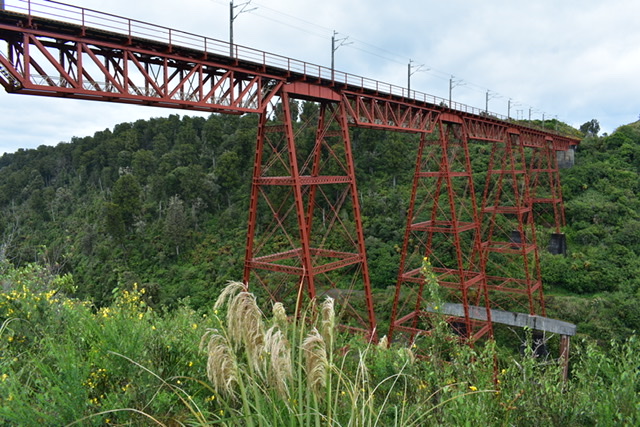
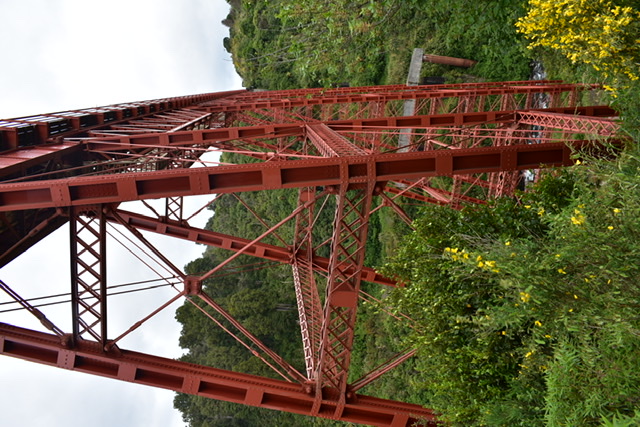
Another lovely drive, despite the accompaniment of rain all the way, but soon into it I stopped to look at the Makatote Viaduct which straddled the river of the same name high above it. Prior to its construction the Central Plateau was closed off to European settlement and its resources and landscape relatively untouched. The viaduct proved to be a vital link for the local and national economy, with a significant amount of passengers and freight transported across it which encouraged immigration with the employment opportunities it provided and establishing settlements in the area. The viaduct was built from 1905-1908, is 262 metres long, 79 metres high (the 3rd highest rail bridge in NZ) and was designed by Peter Seton Hay (1853-1907).
Part of the route took me onto a road that had a sign saying ‘Closed Ahead’. As google maps didn’t agree with that, sending me along it regardless, I thought I’d chance it. It was quite a narrow road and went through what would have been quite spectacular scenery had the weather been better, so sadly no photo stops. There were branches to avoid in the road, the occasional speeding car behind and towards me not driving to the conditions, and at one point some trees leaning at 45 degrees across the road which looked as if they might come crashing down onto the car. That road wended its way for 26km until it came to a T-junction which is where the road appeared to be closed, but fortunately to the right turn and I was travelling left.
I arrived at Sue’s house at 4pm and the first thing she said was that she assumed I had some washing to put in the machine. I certainly did and, being a fellow traveller herself she knew I would. We didn’t stop chatting and we both appreciated conversation over a nice salmon meal. The house is, as usual, on one level and is quite lovely, well designed and really felt lived in despite the fact Sue had only moved in 6 or so months previously. Lots of lovely artwork adorned the walls, photographs of the family (Sue has 2 daughters and a son, five grandchildren and a Maori foster daughter who has three daughters). Sadly Sue’s husband, Richard, died in April last year. She came home from the dentist that day to find he’d died at his desk having had a heart attack. He’d had a heart bypass operation 25 years before. Sue, having been a nurse, wonders if had she been quicker from the dentist, where they were faffing about, she may have been able to resuscitate him. Their daughter was particularly upset as she’d been speaking to him on the phone just 10 minutes before he died. Sue is pragmatic in that she had 50 years of a wonderful marriage during which they had travelled a lot together. They had been planning to go to Zambia this year and Sue intends going there with a friend following the plans that Richard had made.
The house is right next to a lovely lake, Virginia Lake, although it can’t be seen from the house but a track leading round the lake can be accessed from the back of the house. After breakfast the next morning (Wednesday 4th) we walked around it. There were swans and older cygnets, lots of ducks including blue billed ducks, coots and pukekohes. It was an ideal track for jogging.
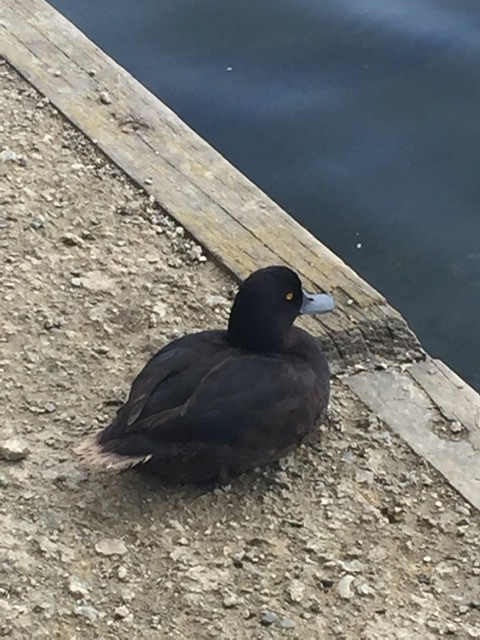
Blue billed duck 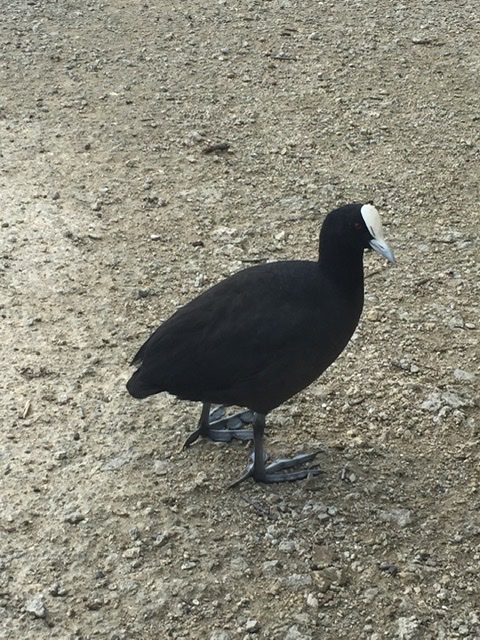
Coot 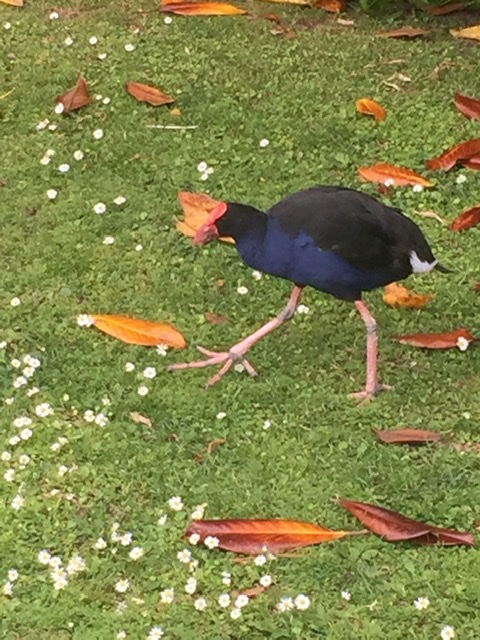
Pukekohe
Then I drove into town, arranging to meet Sue at the cinema at 3pm before which she had a lunch appointment. She is a very busy lady, playing tennis and bridge regularly and getting involved in the running of both clubs; an active member of Rebus (NZ’s new name for Probus) and, most surprisingly, has been a community volunteer for 20 years for the victims going through restorative justice! Her landline and mobile were ringing frequently connected to her various roles.
After parking the car I went into a gallery of mosaic articles. They were beautiful and I got chatting to the friendly saleswoman, called Jenny, who gave me a little tour and explained some of the processes involved. Jenny told me she’d had an operation which nearly killed her and now has a different outlook on life. The artist was Louise Herdman and she offered workshops which Jenny was attending. Some of the mosaics were made of saucers and the maker’s name was purposely left in the work. Making mosaics like these is something I should like to learn to do when I settle back at home.
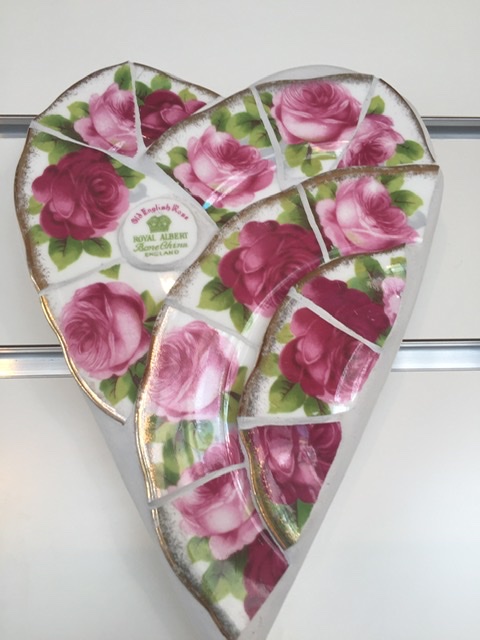
Saucer mosaic 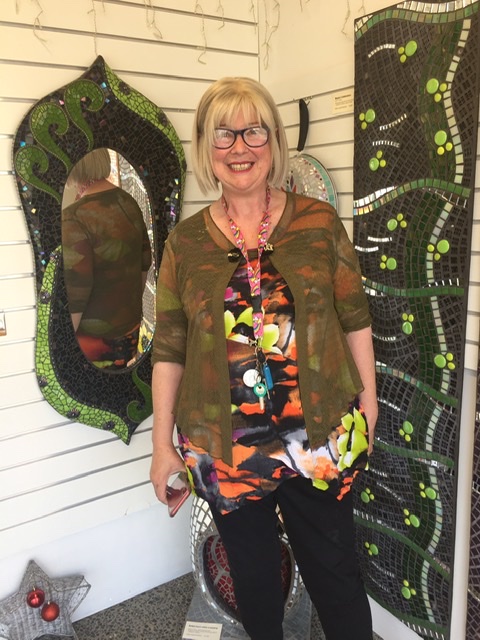
Jenny 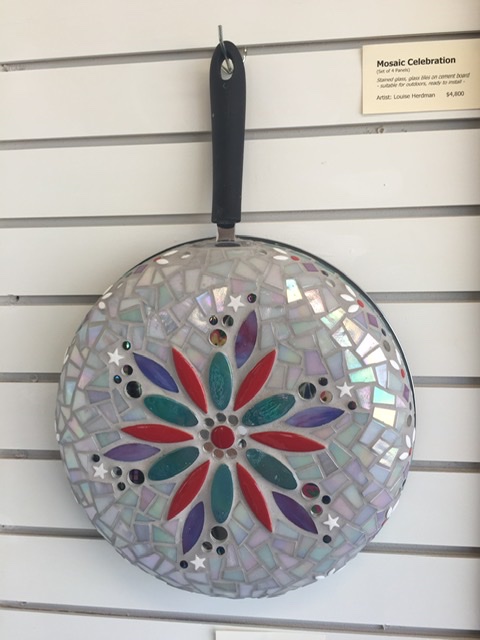
Mosaic on saucepan
The Whanganui river, funnily enough, runs through the town and there is a boardwalk for some length of it, although I didn’t get around to walking along it. I crossed the bridge to one of the ‘must dos’ – the Durie Hill tunnel and elevator, the southern hemisphere’s only public underground and earthbound elevator (actually a lift but they call it an ‘elevator’). There was a 213m long tunnel to get to the elevator/lift, which was one of those old fashioned types with a caged door that was manually pulled open by a bored young man, bored no doubt as he waits ages for someone to go up in the lift. There were plenty of people choosing the steps instead for exercise. It was $2 for the ride up, rising 65.8m. It was first opened on 2 August 1919 as a result of residents of Durie Hill wanting easier access than the steep staircase.
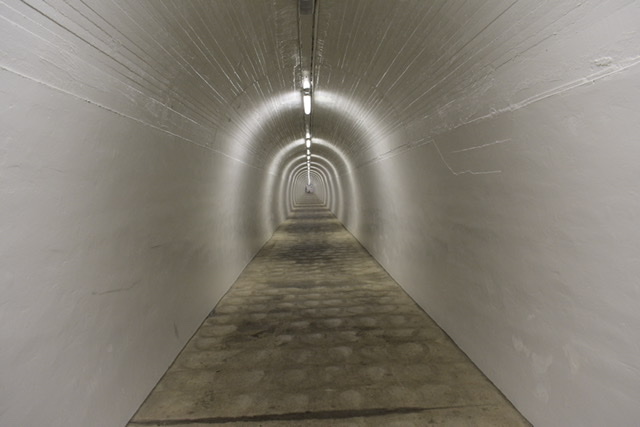
Tunnel leading to Durie Hill elevator (lift) 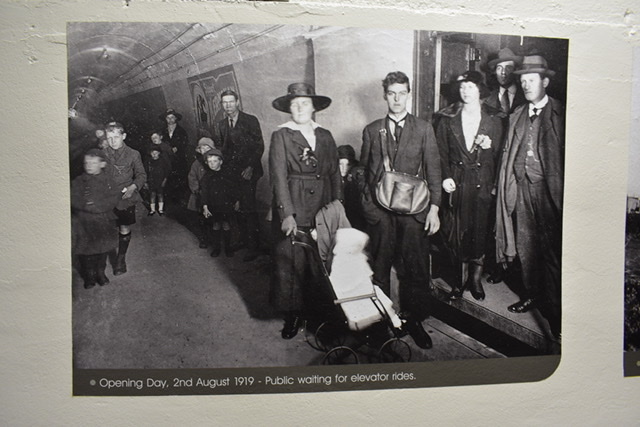
Opening day 2 August 1919
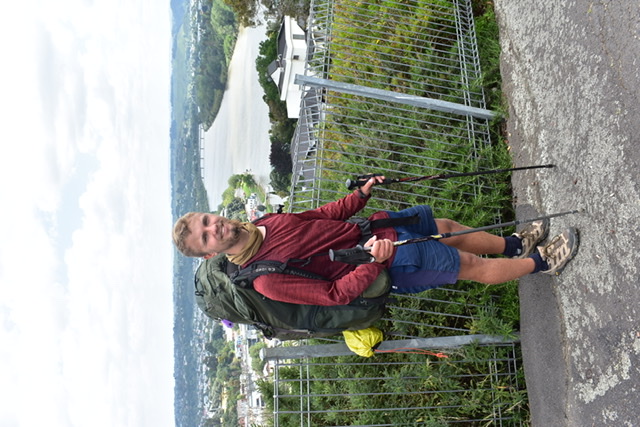
As I emerged from the lift at the top I was met by a tall, fit young man who had a huge backpack on his back and walking poles. He said his name was Dmitri, he was from a town in Russia between Mongolia and Kazakhstan and he was walking the length of New Zealand, 3000km from Cape Reinga in the far north of the North Island to Bluff, far south of the South Island, known as the Te Araroa trail. By way of conversation I said I’d walked the Tongariro Crossing recently and he told me he had also as it was part of the walk! He was camping throughout and told me he had another 30km to walk that day.
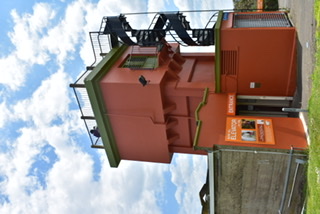
Just nearby was War Memorial Tower with 176 steps to the top from which there were 360 degree views of Whanganui. The tower was opened in 1925 and built as a memorial to the 513 young people from Whanganui and district who died in World War I.
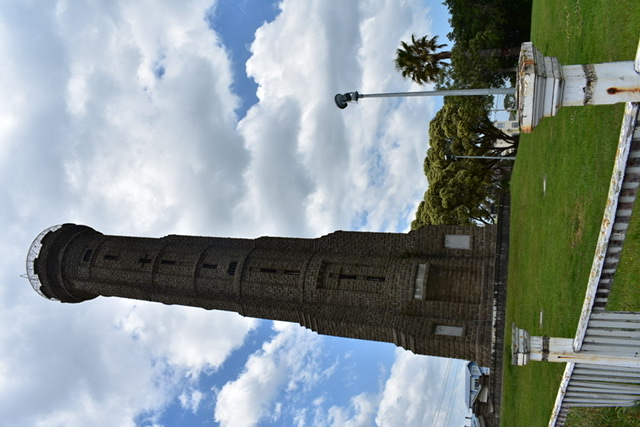
War Memorial Tower
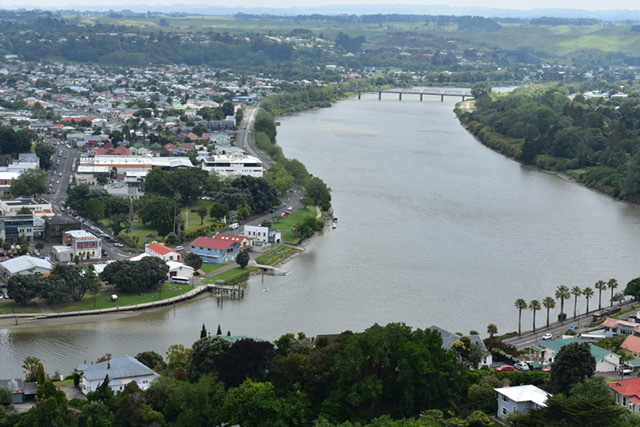
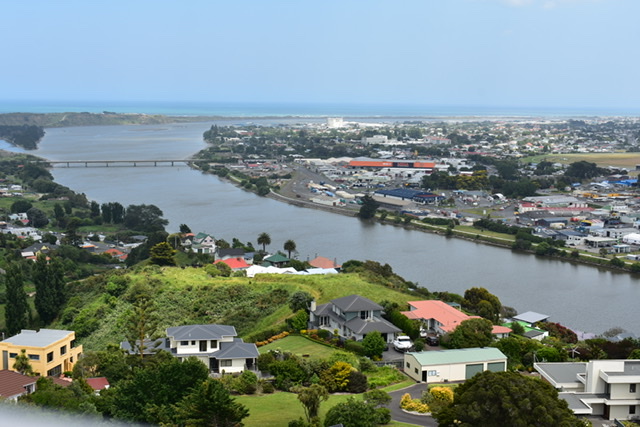

Durie Hill, the area around the tower, is known as Whanganui’s ‘garden suburb’. In 1920, Samuel Hurst Seager – one of NZ’s leading architects of the day – created a plan for the suburb based on the then popular garden city planning principles.
I went back across the river to the Sarjeant Gallery, which was just on one floor and quite small with just a few paintings, photographs and larger exhibits of a chandelier and picture frames strung up:

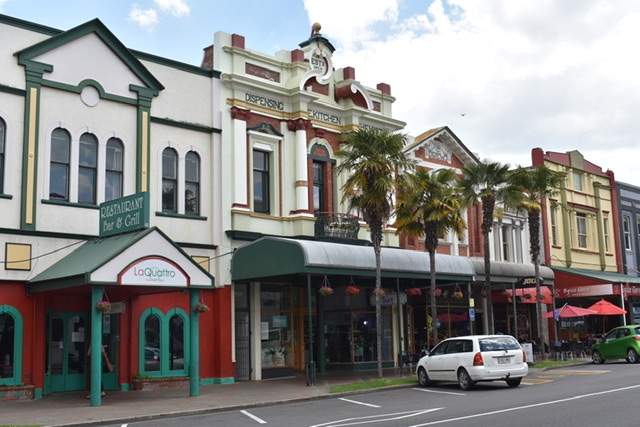
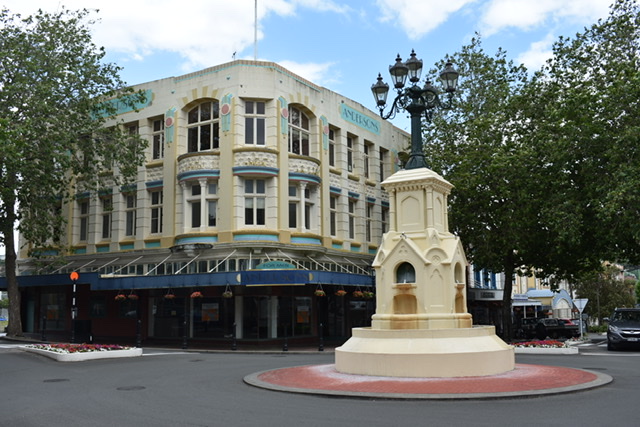
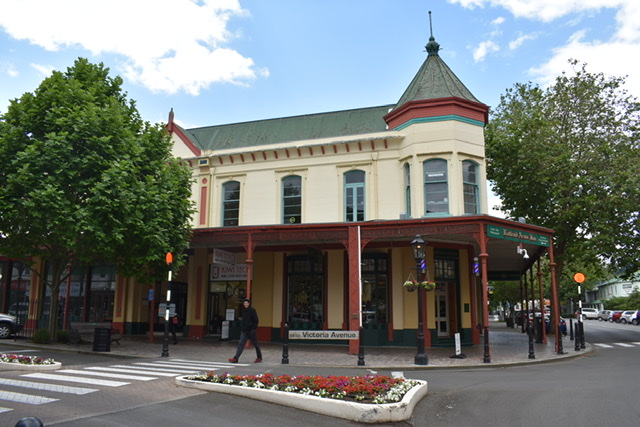
After a nice lunch in the ‘Mud Duck Cafe’, in the iSite building, of a delicious smoked fish pate with toasted ciabatta slices, I went for a wander along Victoria Avenue, which seemed to be the main street of the town centre. There were quite a few Art Deco buildings:

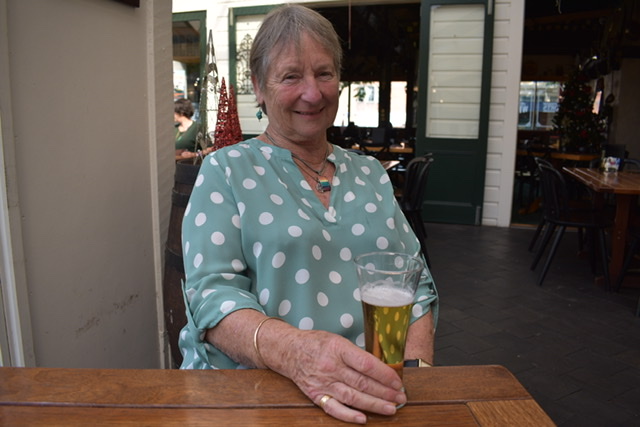
I then met Sue at the cinema and we saw ‘Ride Like a Girl’ about Michelle Payne, one of a family of 10 children whose mother died in a car accident when she was a baby and who became the first female jockey to win the Melbourne Cup. It was perhaps one of the most emotional films I’ve seen in a long time and was excellently made and acted. Afterwards we went for a beer and then I treated us to dinner in a Japanese restaurant that Sue had recently visited and enjoyed.
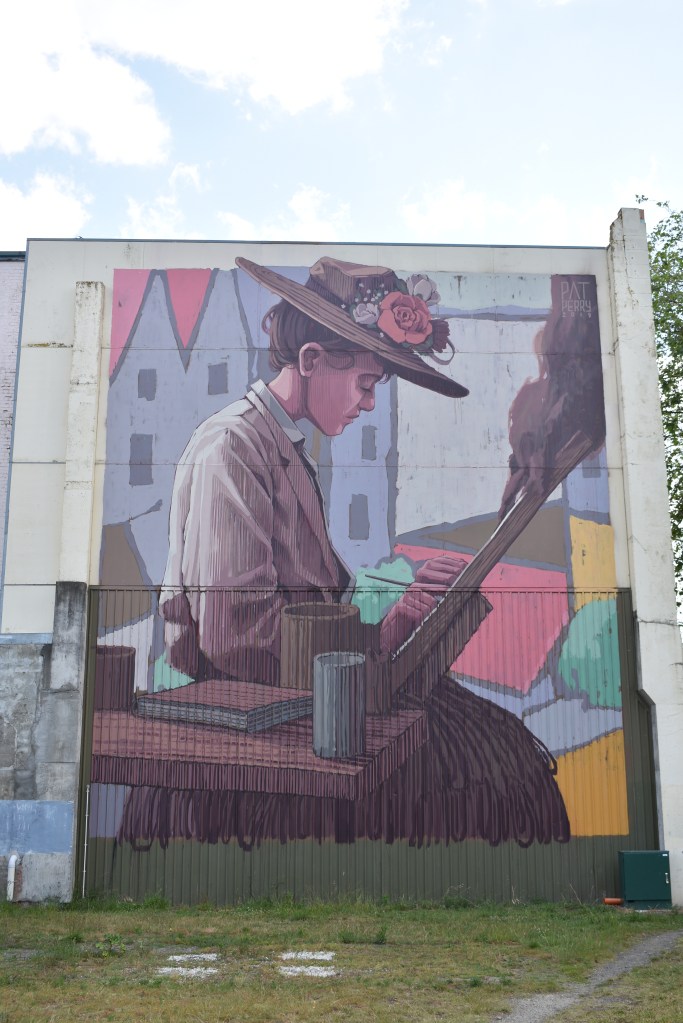
Whanganui seems to have quite a lot of murals around the town and this is one I particularly like:
I was originally planning to leave Whanganui on Thursday morning (5th) but Sue had mentioned that she was going to a concert called ‘Operatunity’ that happens every year and if I’d like to go. I said I would as the drive to New Plymouth (my next stop) would only take about 2 hours, so she’d arranged to get me a ticket from a friend she’d be meeting at the War Memorial Concert Hall where it was to be held. The concert was from 11am – 1 pm and Sue was to rush straight off for a restorative justice conference afterwards or even before the end. She had to leave for preparation for the conference just after 9am.
I went to meet Sue for the concert and, just as I was arriving, got a text from her saying she’d got the date wrong, that the concert was next Thursday! This was disappointing to us both so we went for a cuppa at a nearby cafe and then decided to have an early lunch. Sue had her 1 pm appointment so we said our goodbyes. It’s unlikely we’ll meet up ever again as Sue is adamant she won’t go to England again (she worked there for 3 years as a newly qualified nurse and travelled around quite a bit) and I’m not planning to return to New Zealand in the future, other than the South Island next year. Sue had said how lonely she feels, particularly in the mornings, and had appreciated my company.
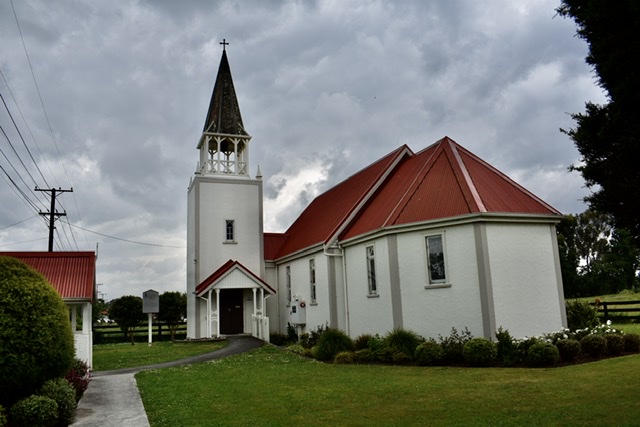
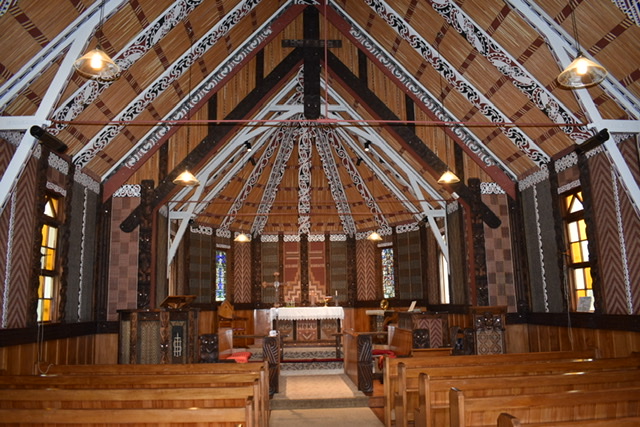
I’d booked to have a tour of the little Putiki Church (aka St. Paul’s Memorial Church) at 2pm and it turned out I was the only one. I nearly went yesterday but there was a tour group of 19 people booked and I’d have to have left early to meet Sue at the cinema. I got there a bit early and walked around the nearby Maori cemetery. The church is unremarkable from the outside but has a magnificent interior completely covered in Maori carvings and wall panels. My guide, Simon, didn’t worship there as said he’s a Roman Catholic but he was very knowledgeable about the meaning of the patterns of the panels and carvings:
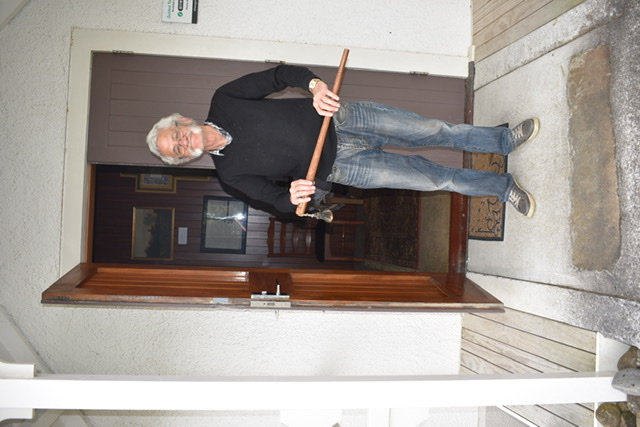
Simon, my guide
From there I drove straight to my next stop, New Plymouth, arriving just before 6pm. My was host, Jerene (who has a partner, Shaun, although he wasn’t around for a while) is originally from Singapore, has a 20 year old daughter (studying Japanese at Tokyo University) and a son aged 26. She had a huge amount of shoes stacked in the hall, and I compared her to Imelda Marcos! She also had a large collection of sand from various beaches around NZ, in glass containers in a cabinet and, at first glance, I thought they were spices. Everything was ordered and tidy. My room was described in rather glowing and over the top terms so I was a bit disappointed when I saw it. Apparently it had been renovated with designer decor and quality linen and a luxurious duvet provided. It was actually a very small room with a couple of tea towels on the wall, green nets at the window and curtains in 3 pieces rather than 2. However, Jerene herself was a very nice, friendly woman who allows guests to use the lounge and kitchen.
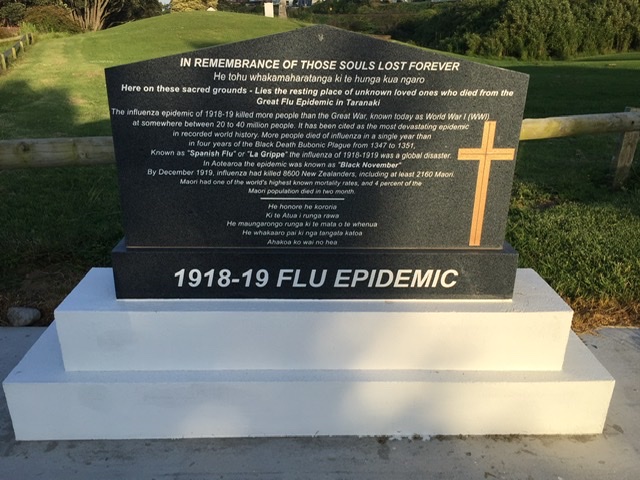
After settling in I went in search of dinner and walked down to the harbour front. However, on the way, I tripped on a wonky pavement and fell on all fours. Fortunately I just grazed my hands and knee (also made a hole in my favourite trousers) and thought I’d hurt my left hand, although knew nothing was broken. After catching my breath I continued walking and found a nice restaurant called ‘Gusto’ and had a huge plateful of linguine with vegetables (their vegetarian dish of the day) to carb load in anticipation of my planned walk the next day. On the way to the restaurant I spotted a memorial to the people who’d died of Spanish flu in Taranaki (district):
About 29km from New Plymouth, and back in the direction I’d travelled, is Egmont National Park, the star of which is Mount Taranaki (Mount Egmont). The summit (2518m) can be walked up (although I read that February – April was the best time for this) which takes 8-10 hours but there are also a lot of shorter walks, so I planned to get advice. On Friday 6th, I had a leisurely breakfast, chatting to Jerene, and didn’t get to the Information Centre until 11am. I was advised to take one route up (Tahurangi Translator Rd) do a bit of the summit and to come down the Holly Hut Track.
The Translator Rd is a very steep 4wd track, 3.5km in distance, initially a gravel road which was then cemented, but so steep at times that I walked on tiptoe. The views of the countryside and mountain made up for the hard walk. A few young men passed me and a few came down who’d been to the summit. One of those was a German man who said he’d set off at 5.15am and had got within 50m of the summit as it was icy. At the top of the track was an empty private hut with a bench outside where an English chap (who’d been living and working in Hamilton for 6 years) and a young French chap were eating their lunch, so I joined them and we made conversation. There was a tower (the Translator Tower) and I wondered why it was called that – something to do with radios. We were soon joined by an attractive young kiwi woman (although she had an odd accent) who’d walked the 3 day circuit on her own with a big pack. She’d slept one night on her own in a hut and one night when she was joined by a man. Brave, I thought. She was wearing, rather inappropriately, trainers so she did well to get to the top in those. It was obvious that the French guy took a shining to her.
After my brief lunch stop I decided to walk a bit of the summit, but the route quickly went across big rocks and loose stones. I had my walking poles and did go a little distance but decided to go back down knowing it would be more difficult going down (no problem going up as I love bouldering/scrambling – great exercise) and, being on my own, would be foolish should I fall and injure myself. I appear to be getting more sensible with age!
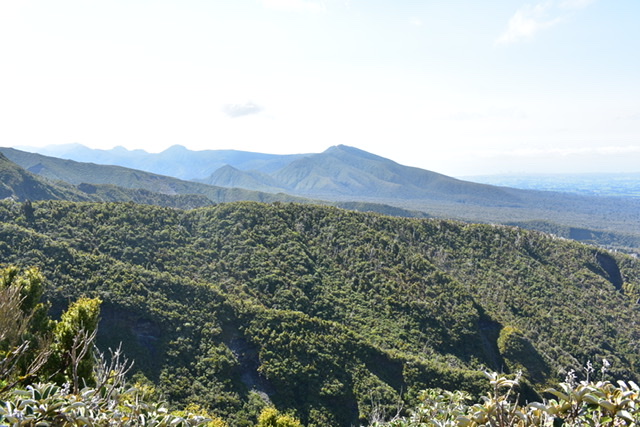
As advised, I took the Holly Hut track back down. This was less well maintained than the other track but was softer ground. I really enjoyed it but was pleased to get to the Visitor Centre 5 hours after leaving it. It’s strange how often I embark on a difficult walk, wonder at the start why on earth I’m doing it, almost turn back but keep going to then thoroughly enjoy being in the open air and the strenuous exercise.
Mount Taranaki Walk:
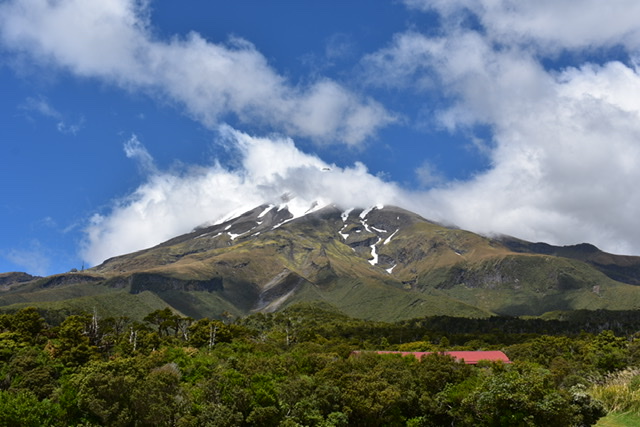
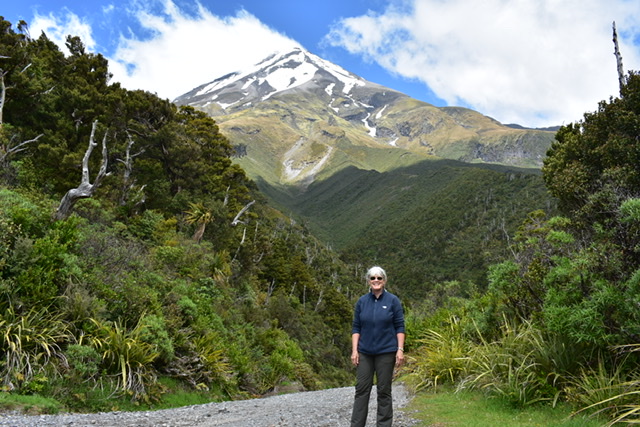
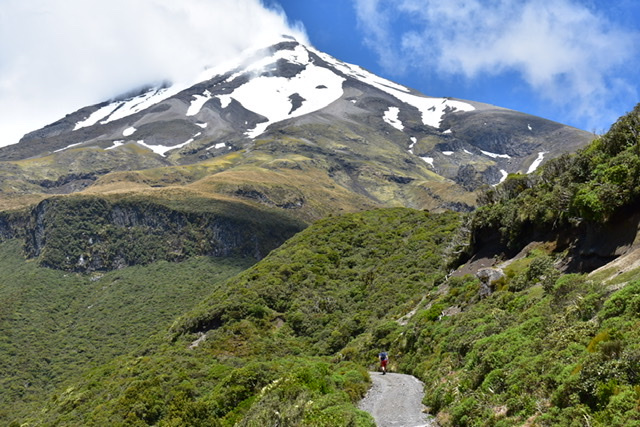
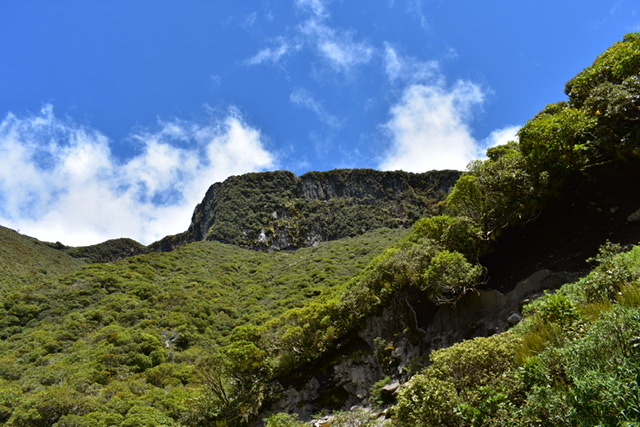
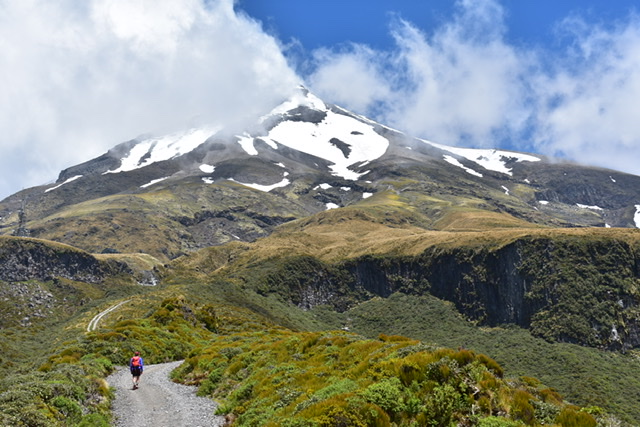
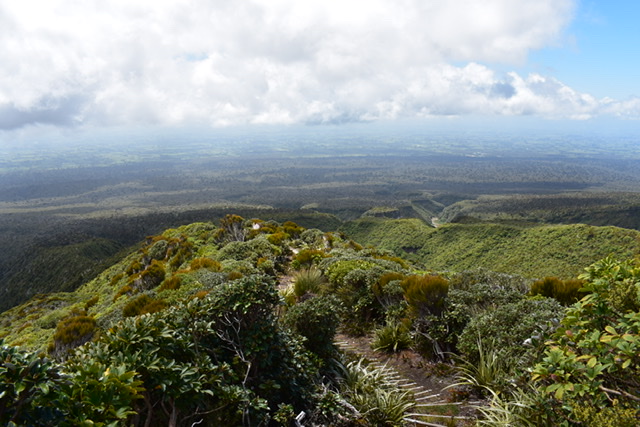
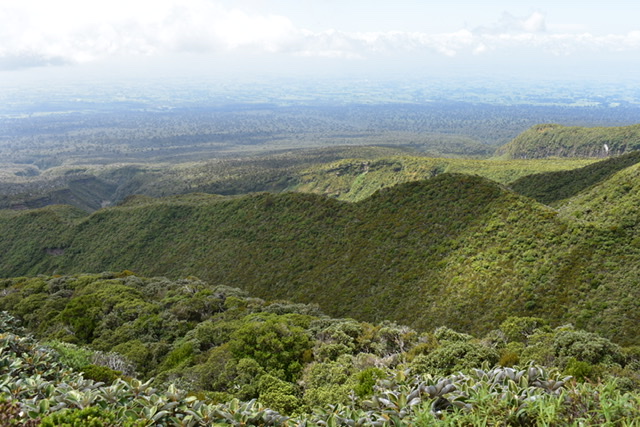
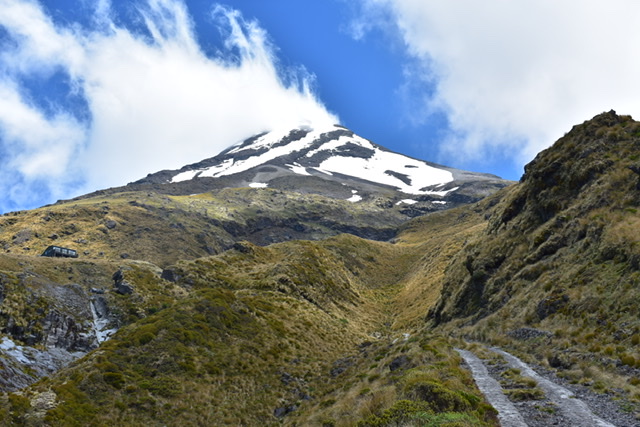
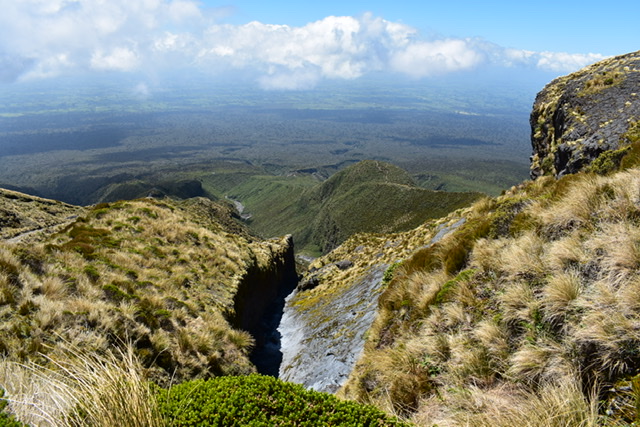
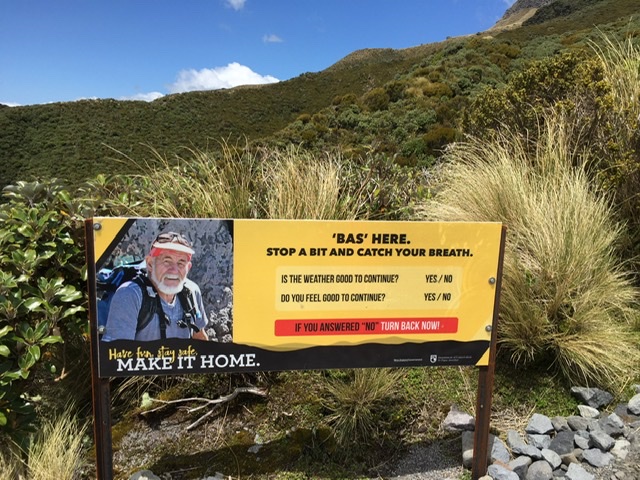
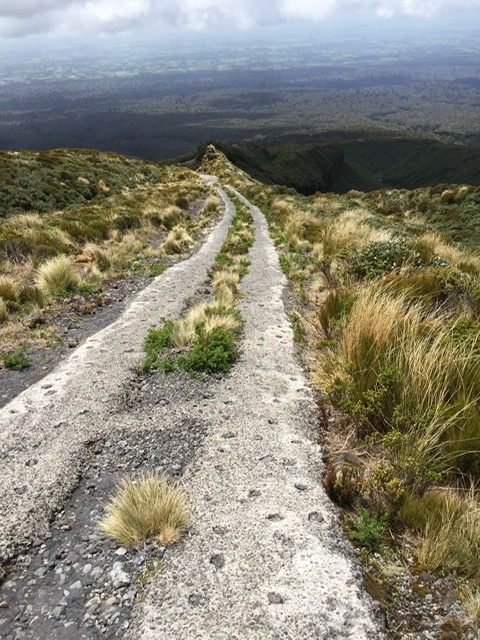
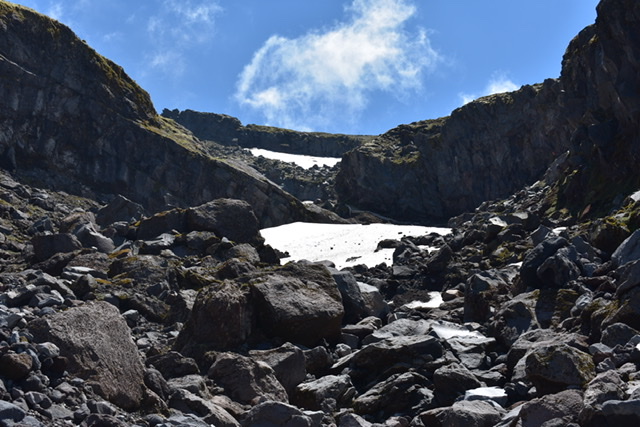
A little way up the summit 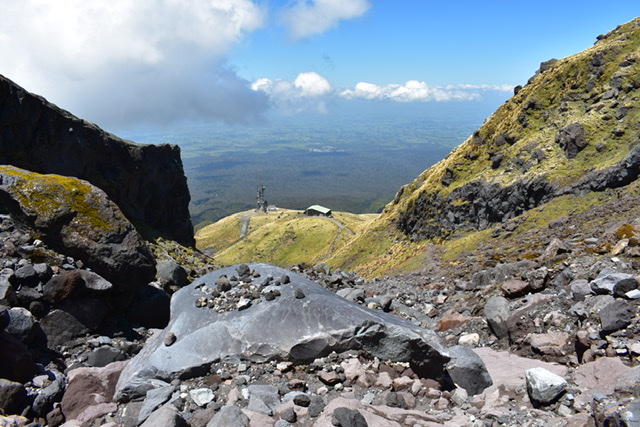

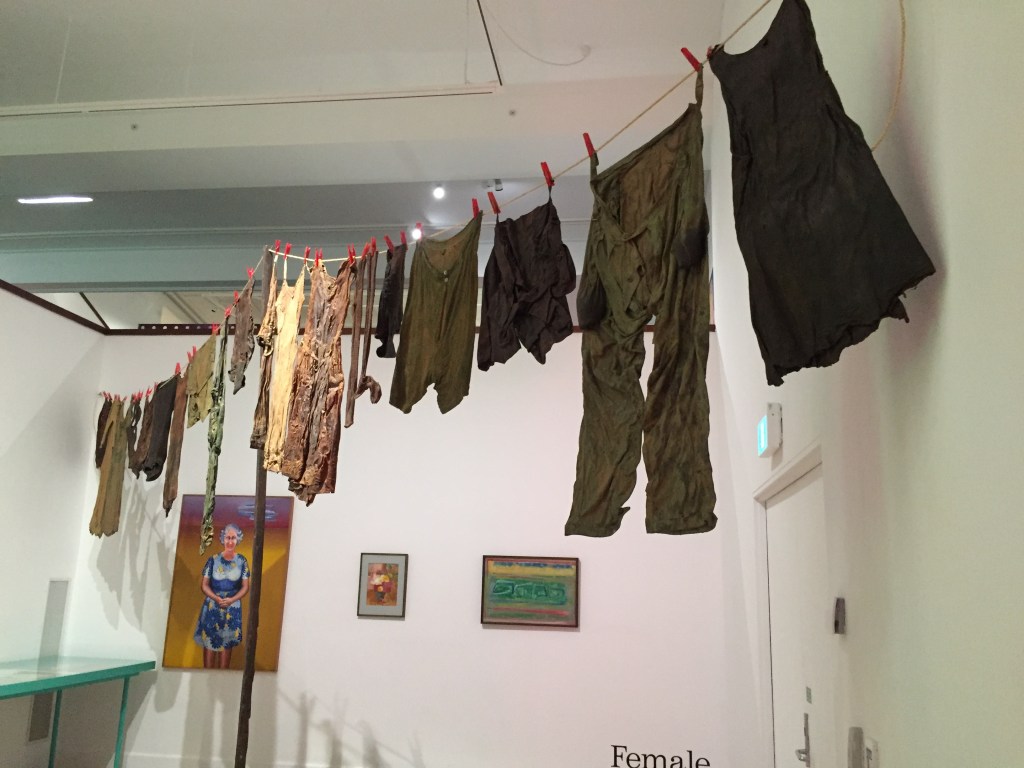
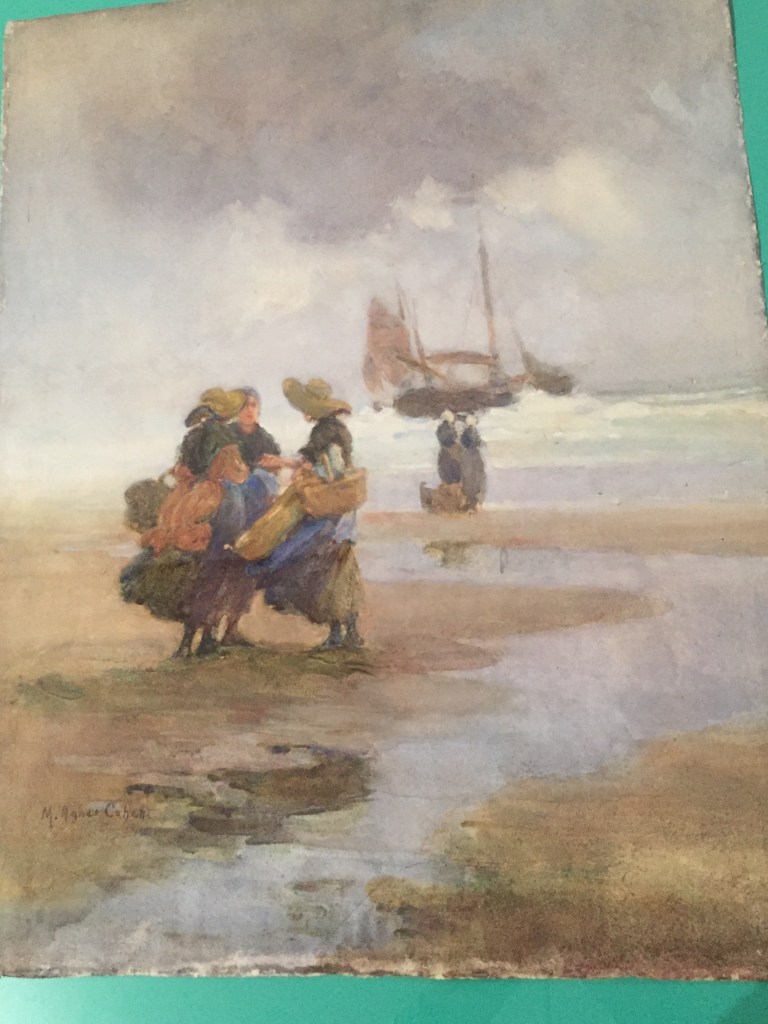
I woke up late on Saturday, just before 9am! I could only put this down to all the walking the day before and catching up on lost sleep at other times. I eventually left the house just before midday and walked into the centre of New Plymouth, just 30 minutes. I went first to the Govett-Brewster Art Gallery which was one big exhibition (‘The scene in which I find myself/or, where does my body belong’) which had just opened, celebrating 50 years of the gallery and curated/designed by an artist called Ruth Buchanan. It contained works she’d selected from the 1970s to the present day, some of which were quite bizarre. I particularly liked the following:
At 1.30 pm there was a presentation of an installation ‘Flip and two Twisters’ by Len Lye (one of NZ’s most original artists of the 20th century) which consisted of 2 x 7 meter long strips of stainless steel spinning at high speed while a central stainless steel loop turns itself inside out, emitting a shattering sound:
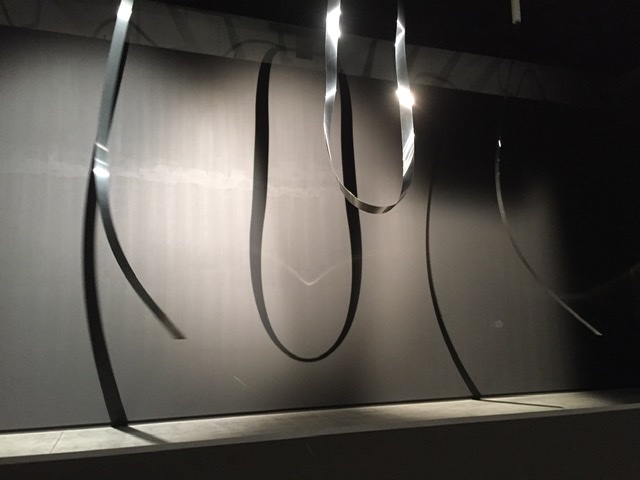
Then at 2pm there was a talk with Ruth Buchanan and another artist which I gave 30 minutes of my time to before leaving as I found it rather dull.
From there I walked to the Pukekura Park which looked pleasant enough but I purely sat on a bench overlooking the lake and had a late picnic lunch. The park was highlighted in ‘Lonely Planet’ as worth a visit. Then I walked through the shopping centre to the other ‘must do’: Puke Ariki, a lovely library and wonderful adjoining museum. I only had an hour there before walking back to the house mainly along the coastal walkway which, disappointingly, often didn’t have views of the coast.
I rather liked this street artwork:

I left the Airbnb soon after 9am on Sunday 8th as I wanted to get to Stratford, 40km south of New Plymouth, where there’s a clock tower, or Glockenspiel as they call it which is German for ‘playing clock’, which 4 times daily after chiming has figures emerging from the windows as an excerpt from Shakespeare’s ‘Romeo and Juliet’ is played via a recording. I got there in time for the first performance at 10am but could hardly hear the speech owing to the traffic trundling past in the rain and poor quality recording. I took a video but deleted it. This is the first of its kind in NZ and it was quite charming. The town’s street names are all drawn from Shakespeare.
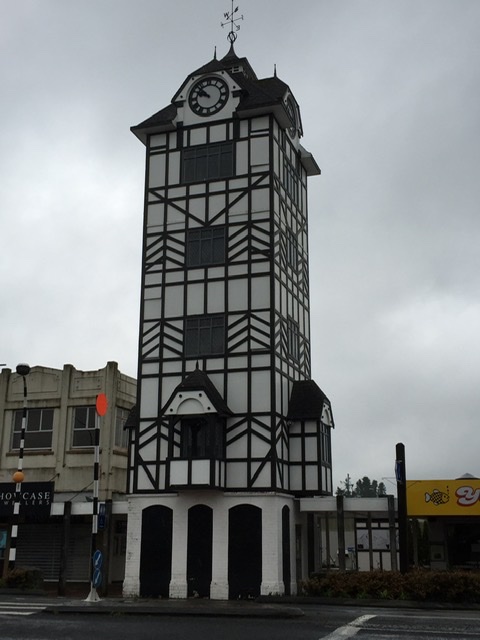
I had a long drive ahead of me to Rotorua as, rather than take the quickest route, I decided to go on the ‘Forgotten World Highway’, NZ’s oldest heritage trail between Stratford and Taumarunui and 155km long. It follows ancient Maori trade routes and pioneering farm tracks through historic settlements, native bush and stunning natural scenery. Unfortunately it rained all the way so I didn’t make stops at the heritage spots.
There were 4 saddles (Tahora, Whangamomona, Pohukura – named after a prominent Maori chief, and Strathmore) along the route which were lovely to drive around despite the rain, and there were hardly any other cars so I could drive leisurely. I did manage to get a couple of photos of the lovely countryside in between bouts of rain:
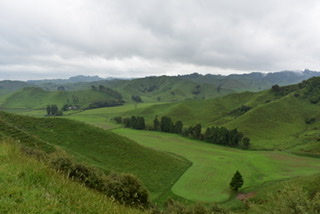
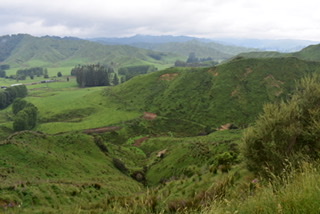
The route also went through the single lane 180m long Moki Tunnel built in 1936 known locally as the ‘Hobbit’s Hole’. Some way before Taumarunui the road was closed so there was a detour which eventually led to the road to Rotorua. The rain got worse until it became torrential at times which was unpleasant, but still there were idiots speeding past me.
I got to my Airbnb (called ‘White Linen’) situated about 12km from the Centre of Rotorua just before 6pm. I’d been thinking how I didn’t fancy having to drive into town for dinner in the appalling weather. Dayhl and Kevin, my hosts, were lovely and said they had enough food for me to join them and couldn’t let me drive into town, so I enjoyed a lovely fish, mashed potato and salad dinner with them and we chatted. Again lovely people. The house has been recently refurbished to a very high standard and they can accommodate up to 5 people (friends or family) but if a single person or couple books they don’t take on other people. They had also been selected as one of the places where a Dutch travel company, Travel Essence, sends guests.
The next day, Monday 9th December (how time is flying by!), I drove to Lake Tikitapu (Blue Lake) which has a 5.5km circuit. However half of that is walking along the road so I took Dayhl’s advice and walked the half that goes through bush and then back, after stopping to have my picnic lunch and read my book by the lake edge.
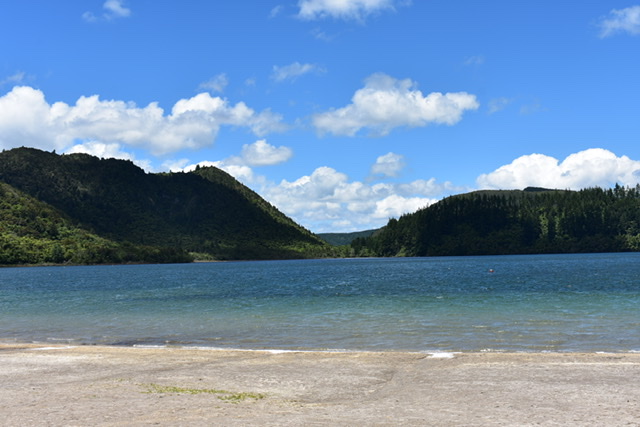
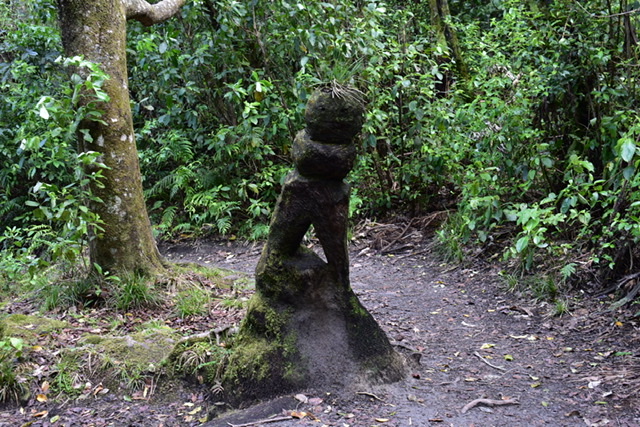

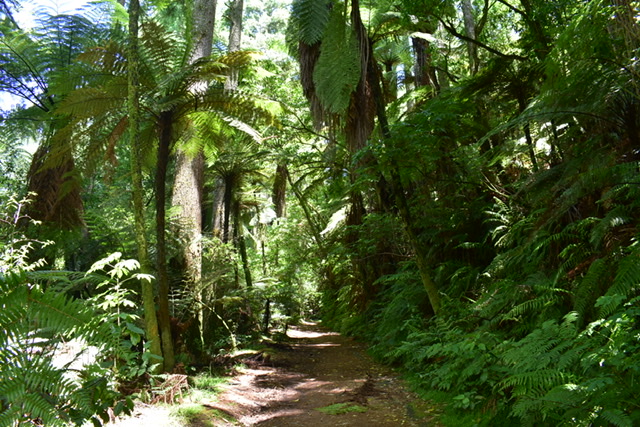
I then went to the Redwoods Forest and walked the canopy walkway amongst the Redwood trees which was 700 metres long with 28 suspension bridges, most with an information board.
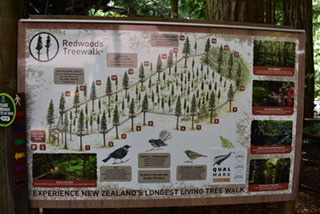
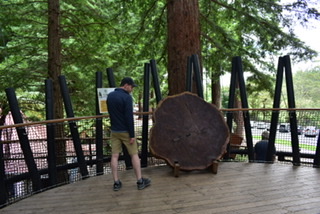
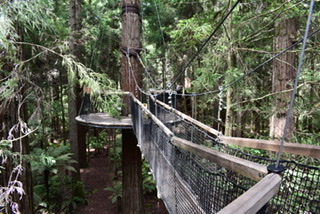
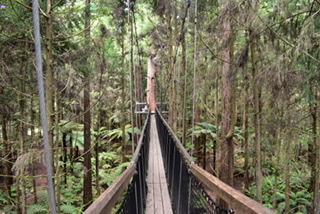
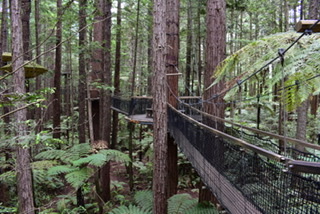
The first redwoods in this forest were planted in 1901, the tallest being 72 metres high and 2 metres in diameter. The walkway is suspended from the trees using a specially designed sling wrapped around the redwood trunks without causing them harm. The tree walk took just 6 weeks to instal.
I then did just a short walk in the forest but was feeling pretty weary by this time, not from today’s walking particularly because it was pretty gentle but, I think, from the accumulation of hard walking I’d done in the last week which my body was clearly reminding me of.
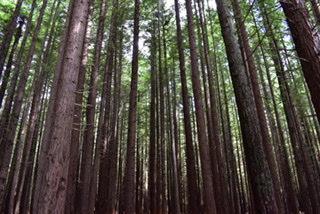
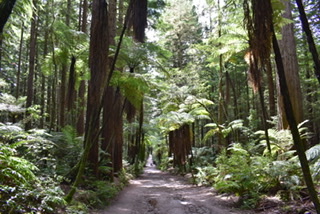
There was a large ‘Memorial Redwood’ to Mary Sutherland who graduated from Bangor University, Wales in 1916 with a BSc in Forestry and the first female forestry graduate in the world. She was also the first woman appointed to the NZ Forest Service as a forester where she worked from 1923-33 firstly in Nelson and then at this forest in Rotorua.
I drove into the town centre, which is quite large and looks like so many other North island towns but on a larger scale, and had an early fish dinner in a little street of restaurants called Eat Street. I back to the Airbnb to collapse exhausted on my bed after discovering that White Island, where I was just over 2 weeks ago, had erupted and there were fatalities and casualties. It made me think what a close call but particularly about the lovely young guides on my tour and hoping they were safe. It transpired that most of the people on the island had been from a cruise ship, ‘Ovation of the Seas’ moored in Tauranga in which, understandably, the atmosphere must have been strange.
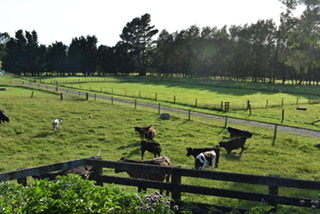
On Tuesday 10th, after catching up with the latest on the White Island eruption on tv with Dayhl I accompanied her to help move her calves (all hand reared by her) from one paddock to the one just in front of the back of the house. They seemed a bit shy of me and skittish but were a lot more compliant than the alpacas I’d helped move in Whakaramara. Since embarking on housesitting and looking after different animals I’ve realised how much of a lover of all animals I’ve become and enjoy watching their antics. Later the chickens were set free to roam and it was quite funny watching one of the calves chasing them:
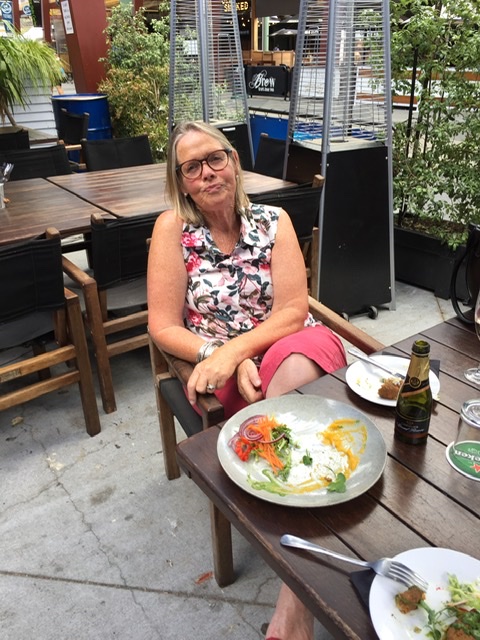
I wasn’t really in a rush to go off doing the touristy thing but instead took pleasure in doing some normal stuff like hanging washing on the line (mine and Dayhl’s) and doing some weeding in the garden with her. Then we went into town and, after Dayhl had done some errands and I’d bought some new knickers (no M & S here but a shop called Postie which I’d originally thought was the Post Office but which is a cheap clothes shop) we had some sparkling wine and shared some falafels at a bar called Ambrosia and a good old chin wag and laugh. It was fun:
Dayhl then left me and I went off to Kuirau Park, a free geothermal Park in the centre of town. I hadn’t recognised anything at all about Rotorua from my visit of 26 years ago but did remember visiting some stinky mud pools, just not where they were.
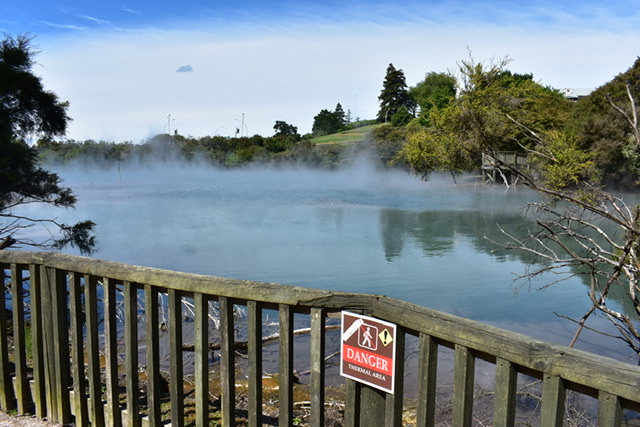
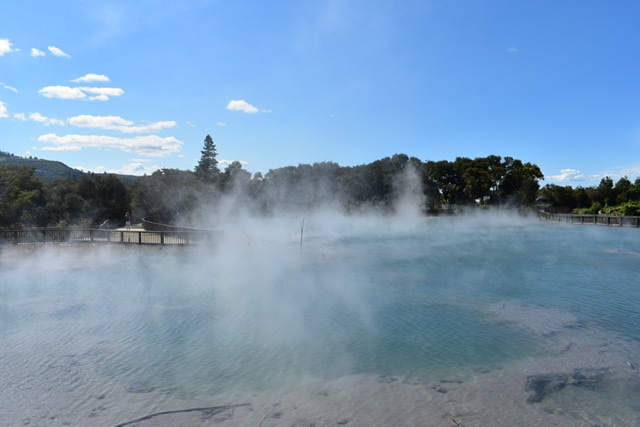
Kuirau Park
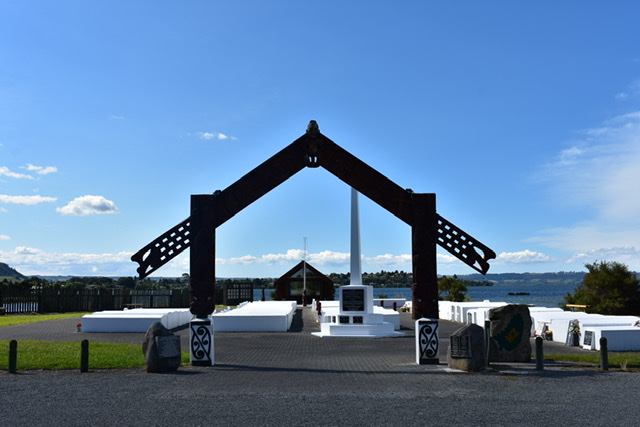
Whilst walking into the centre I came across Ohinemutu, a living Maori village home to the Ngati Whakaue iwi (tribe) where tours had been available earlier. The tribe chose the location for its lakeside setting and abundant geothermal energy used for cooking, bathing and heating. There was a Church, marae (meeting house) and other buildings. Ohinemutu became the main centre for the Rotorua region in the early 1870s. Visitors arrived at this once bustling settlement before experiencing the healing waters of Rotorua.


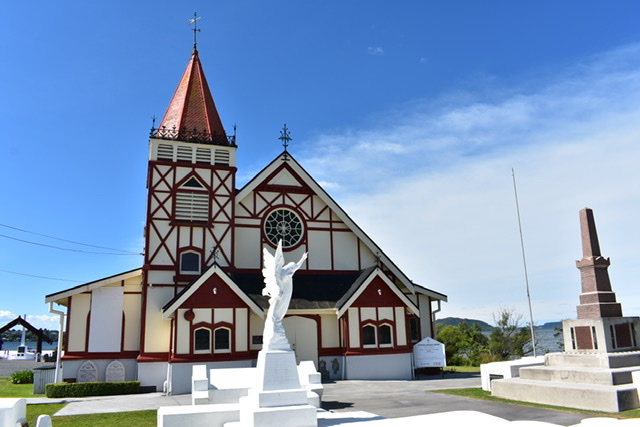
St.Faiths Church
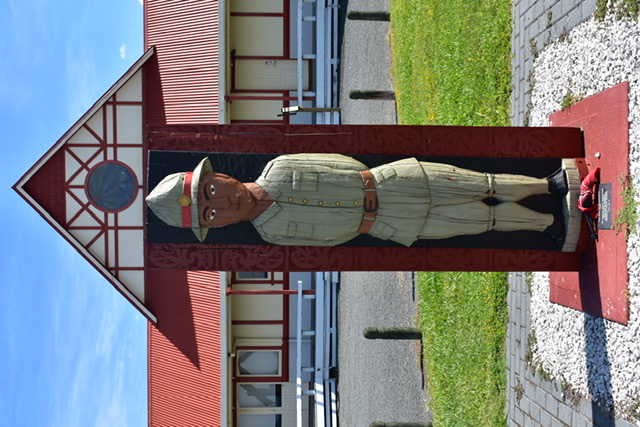
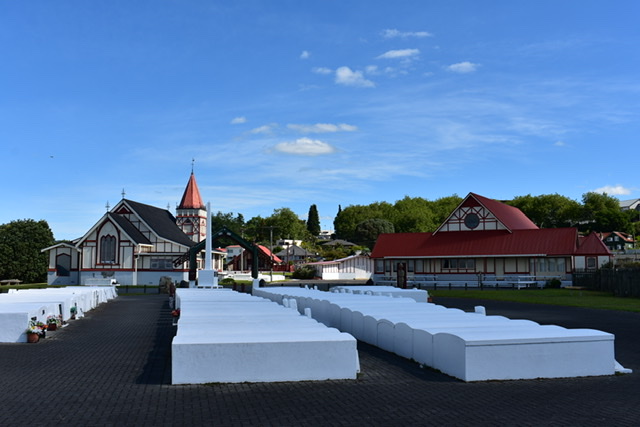
After wandering around killing time in town, including the iSite office which is in an interesting building – the old Government Tourist Bureau and what was once the Rotorua Post Office:
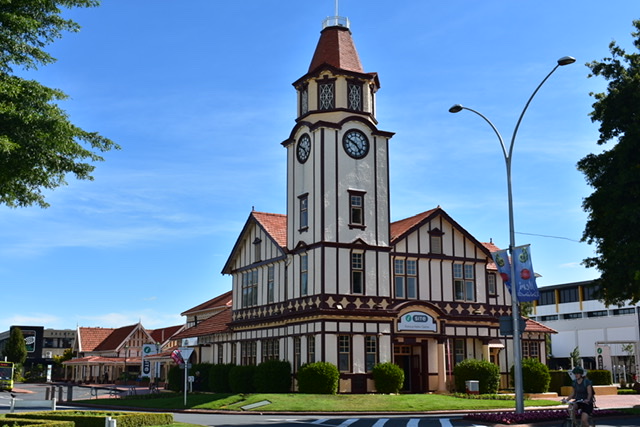
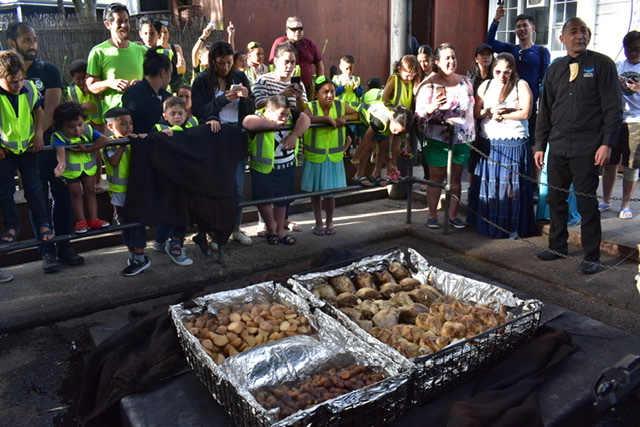
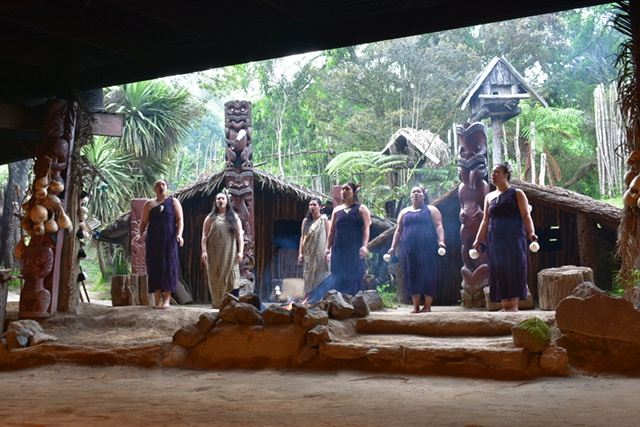
I went to Mitai Maori Village, a reconstructed Maori village, for a cultural evening that I’d promised myself to go to as had been told Rotorua was the best place to do this. It started at 6.30pm and there were 150 people booked, which included a group of very young children from a Maori speaking school. Apparently, some years ago any child speaking Maori in class was punished with the cane! There has, in recent years, been a big move towards encouraging the Maori language and culture and I have certainly noticed the change since my first visit all those years ago. This can only be a good thing.
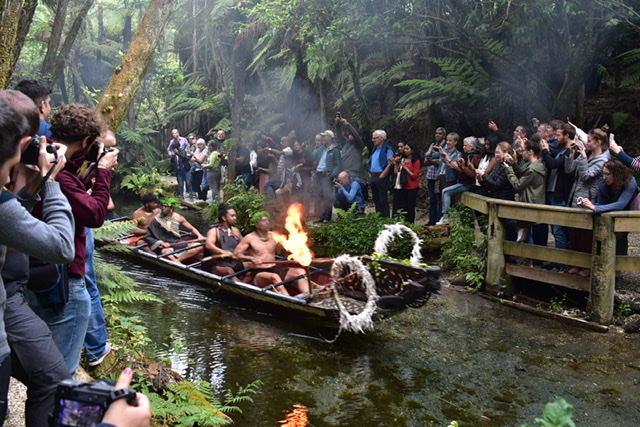
We were led in groups down to a stream to await a waka canoe rowed by men in typical Maori dress and chanting. Then we watched the unveiling of the hangi (food cooked underground – lamb, chicken and potatoes) and on to a very good performance including games, dances, music and explanation of various moves and instruments. Of course there was also a haka. Then we had a buffet meal. I was sitting on a table (we’d all been placed on particular tables) with some Indians from Singapore, one of whom was extremely obese and before she’d finished her main course went to get a huge pile of desserts, I guess because she was worried she might not get any! There was to be a visit to the stream and then to see some glow worms, but it was looking like that all might not start for a while so I decided to leave. I had enjoyed the experience.
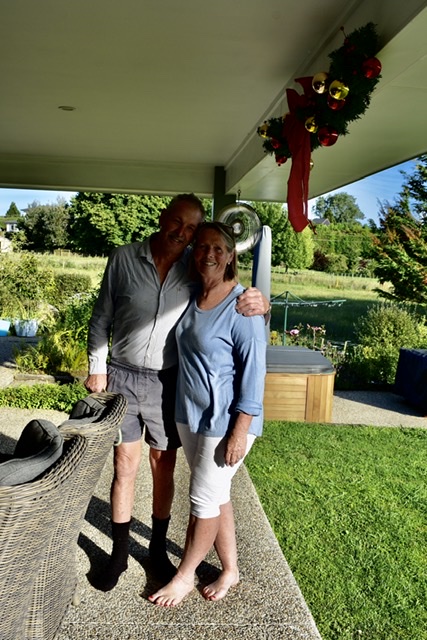
I left Dayhl and Kevin soon after breakfast on Wednesday morning but not without taking a picture of them, a really lovely couple who are extremely happy together and it shows:
I rushed off in order to get to Lil and John’s (the couple I met at the East Cape Lighthouse) as I’d received a text from them reminding me I was still invited to stay or pop in. They live in Papamoa, just near Tauranga, so it was on my way. They have a lovely house with large grounds and lots of fruit trees, in fact Lil was collecting plums when I arrived. Their daughter and children live in the house next door and Lil had told me that often one of them would sneak in their house early morning and get into bed with them, which was a pleasure.
We chatted more about travelling, as they want to go to Sri Lanka probably in March. I sat with them in the sunshine drinking tea and eating a home made muffin with yoghurt and strawberries. Another couple who I’d have no hesitation in welcoming to my home, genuinely friendly.
I then dropped off my hire car and got the bus into town to await the InterCity bus to Auckland where I spent the night in Econo Lodge again as so handy for the bus station.
Another successful road trip ends. On to the next adventure!
 NeverSayNeverNomad