
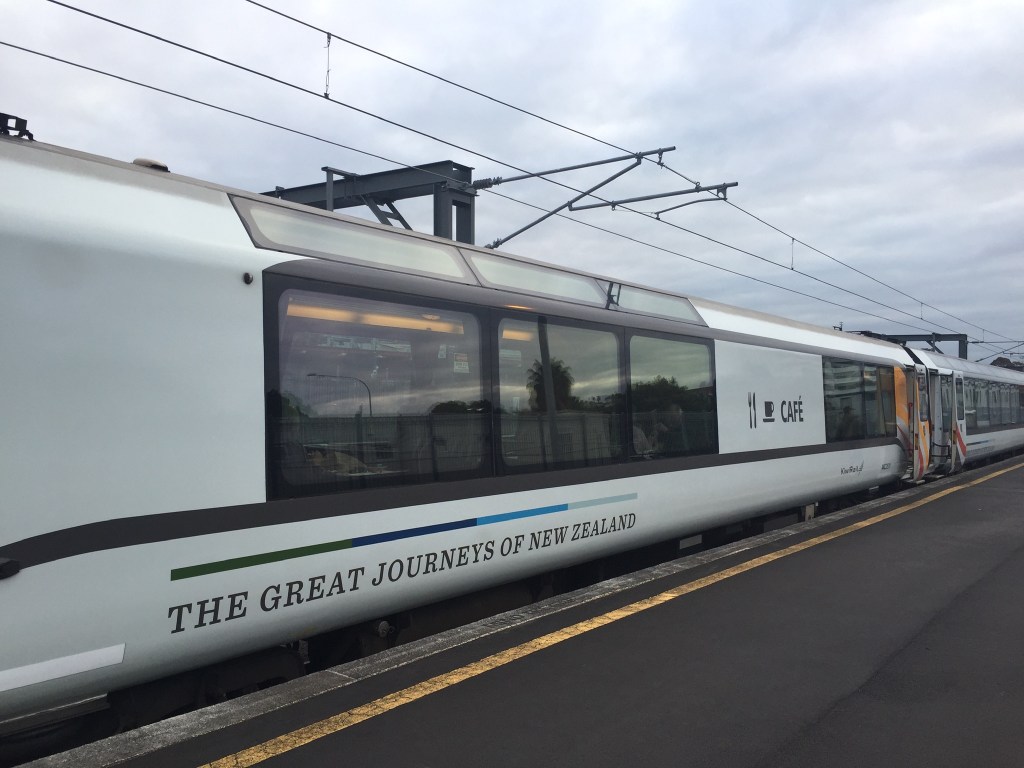
I wheeled my heavy case for 30 minutes to the railway station arriving rather hot and bothered, not surprisingly, at 0715 to check in to the Northern Explorer train for the 0745 departure. I found that I had a seat facing backwards at a table opposite a mature couple who I could immediately tell were ‘loved up’. I tried to initiate a conversation but it was clear they didn’t want to engage either with me or anyone else. Later, fortunately, a couple sat on the other side from me also facing backwards who were friendly although, before they got on the train, I’d decided to sit in the cafe and stand up in the open carriage to get better views and avoid having to listen to the other couple’s conversation and ignoring of me.
We were provided with headsets as there was a commentary along the way. Each time the commentary was about to start a rather annoying loud bell was sounded although it wasn’t until we were half way through the 11 hour journey that I realised what the bell signified. I had planned to take notes but I found the commentary rather dull and gave up listening after a while.
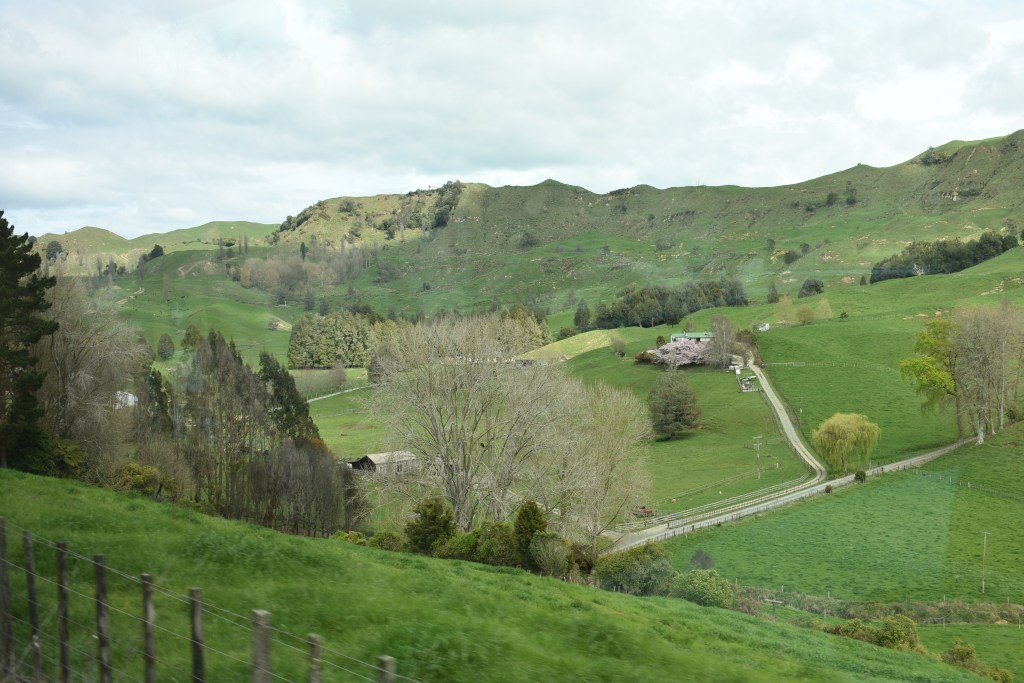
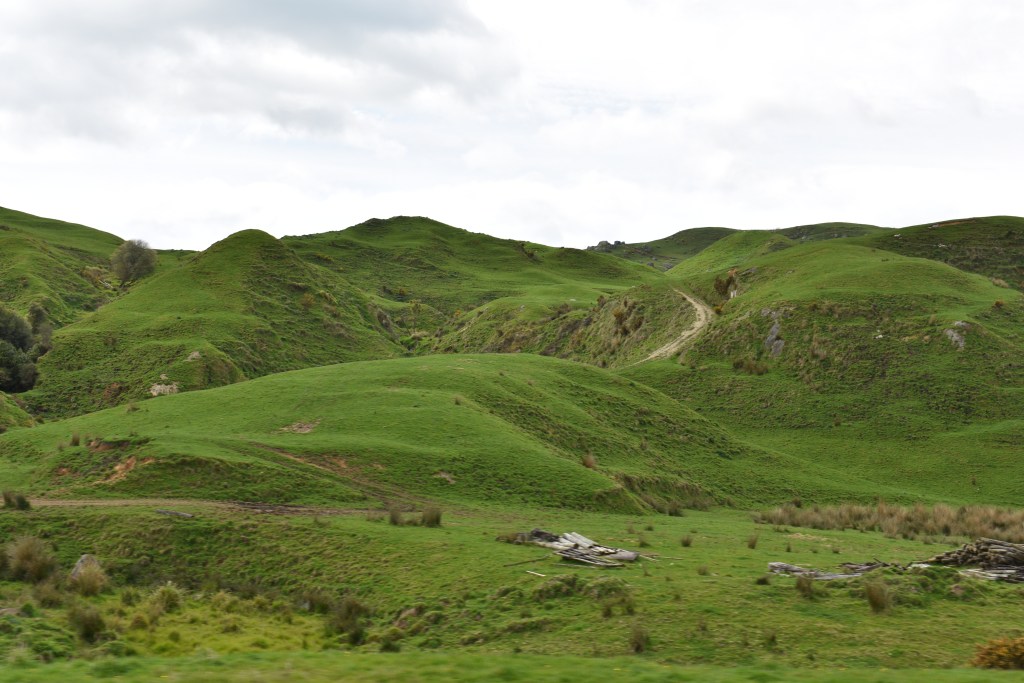
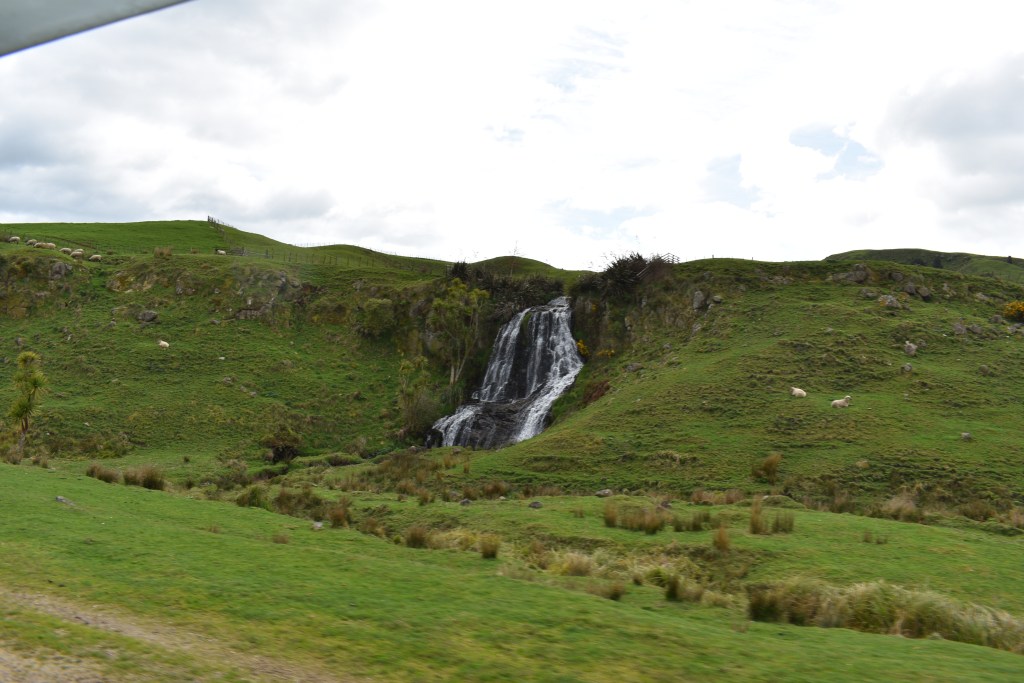
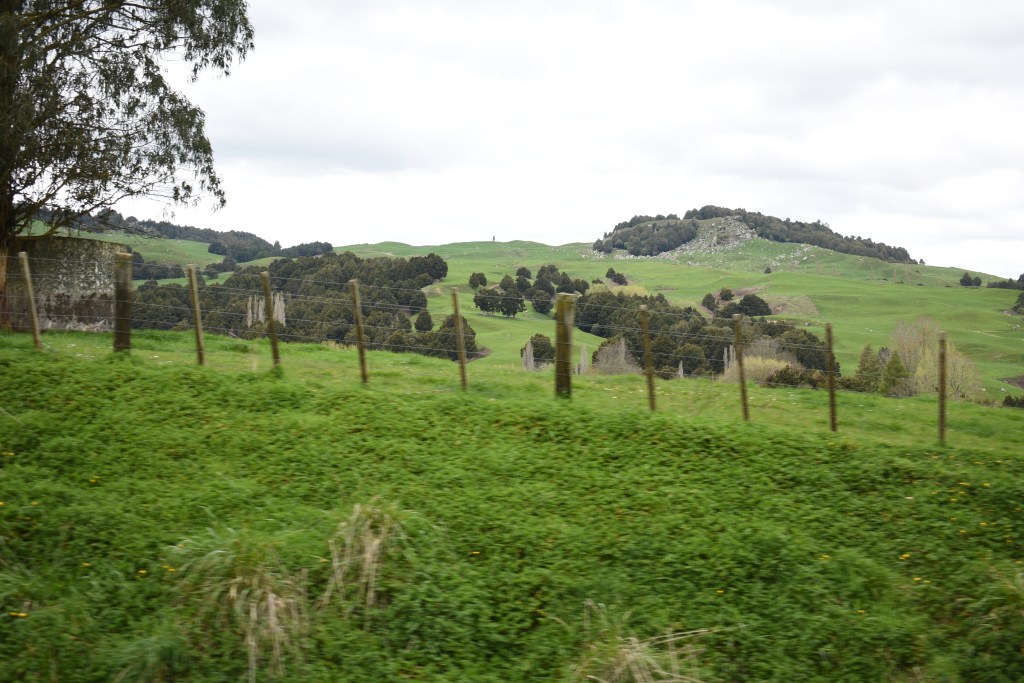
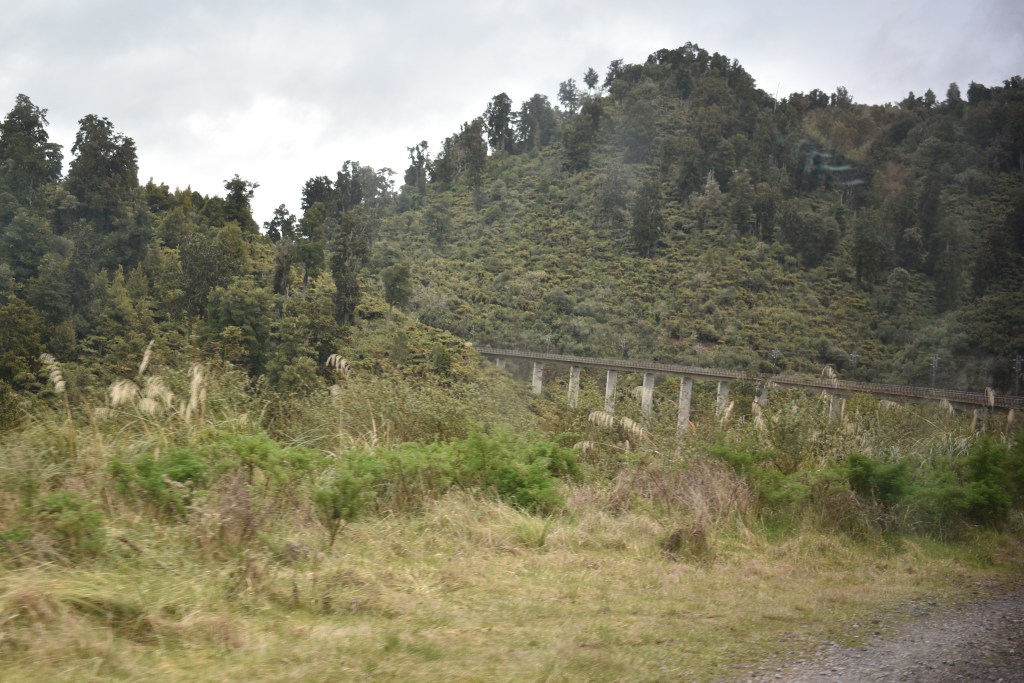
The Northern Explorer is New Zealand’s longest running passenger service with a few stops along the way, including Hamilton and Palmerston North. The scenery was lovely, some of which I’d seen on bus journeys. A highlight mentioned was the Raurimu Spiral – an engineering masterpiece. During construction of the central section of the railway a major obstacle was faced – how to negotiate a 139 meter escarpment between the Volcanic plateau to the east and the valleys and gorges of the Whanganui River to the west. The problem was solved in 1898 when surveyor Robert Holmes designed a single track railway spiral which includes one horseshoe curve, two 90 degree curves, two tunnels and one full circle crossing over the longer tunnel. This was a highlight of the journey although I was told by another passenger that it was more interesting from outside the train!
I’m sorry to say that I didn’t enjoy the train journey as much as I was expecting to and was glad when we finally reached Wellington at 6.30 pm.
I’d booked an Airbnb for 7 nights in Wellington and was met at the station by Harriet. The family home is a little way out from the centre in an area called Karori but there are regular buses into town from the end of their road. At the house I met Harriet’s husband James and 3 of their 4 children, Allegra (18), Paloma (16) and Henry (8). Their eldest, Essie (26) is at Auckland University doing a PhD in chemistry. I soon realised the children are extremely bright. Harriet was a Solicitor but had given it up when she had the children, although later tried going back to studying law but found it too stressful. James is in IT. I had expected to go out for dinner but there was nowhere nearby and the family very kindly gave me some of their equivalent ‘Hello Fresh’ dinner and some wine. I felt instantly at ease with them all.
On Tuesday I walked into town, taking about an hour. It was steeply downhill so decided I’d be getting the bus back. As usual my first stop was the i-Site office where I was approached by Rosemary, originally from Belfast. She was really helpful and knowledgeable and we had a lengthy chat. I wondered if she might have known my friend Cherrill, but she didn’t. However she told me that Karen Keating (Gloria Hunniford’s daughter who sadly died of cancer) had gone to her school when I told her Gloria had gone to Cherrill’s school. Rosemary had had a very interesting working life and played French Horn in Wellington’s Orchestra, her husband playing violin.
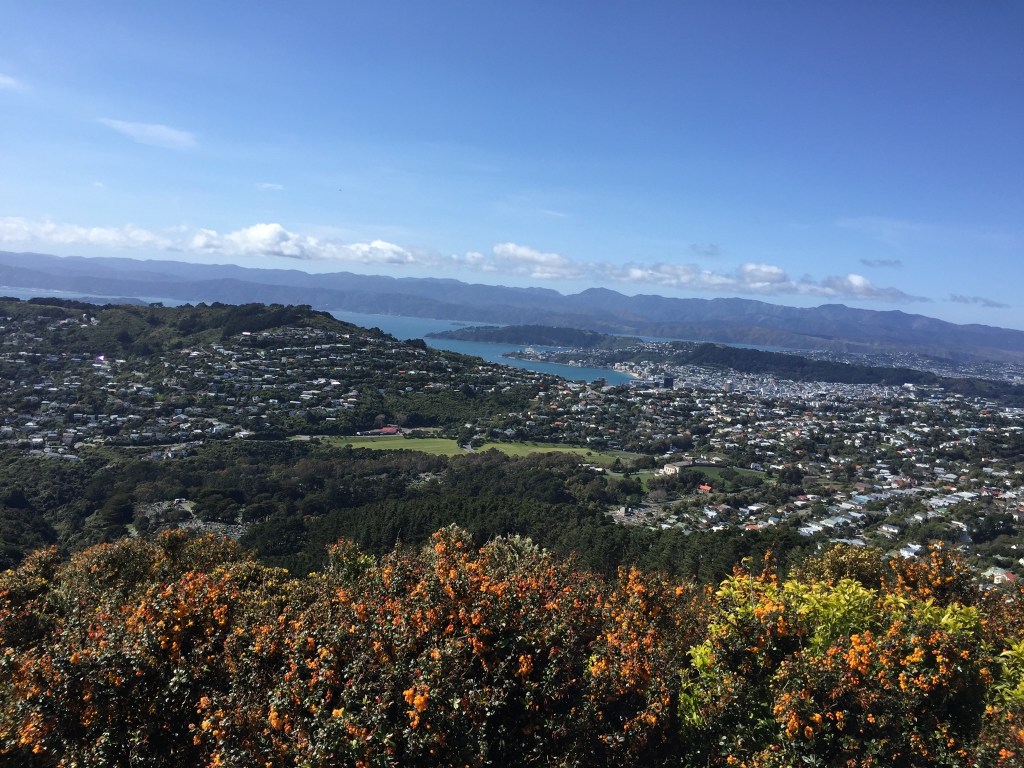
From there I made my way east of the city along Cuba Street, where Rosemary had told me there were lots of reasonably priced restaurants, to Mount Victoria – at the top of which (at 196m high) is Wellington’s most impressive viewpoint. There are a variety of walking and mountain biking paths, and it’s a super place for dog walking. I enjoyed the steep walk to the lookout. On the way I passed one of the film locations for ‘Lord of the Rings’, the Hobbit Hideaway:
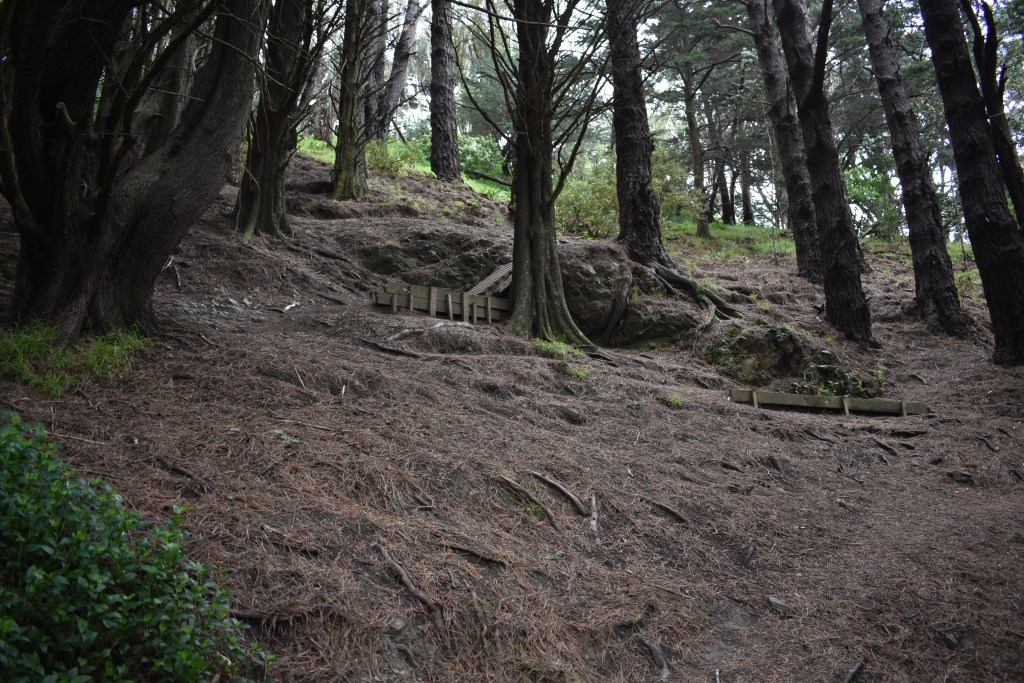
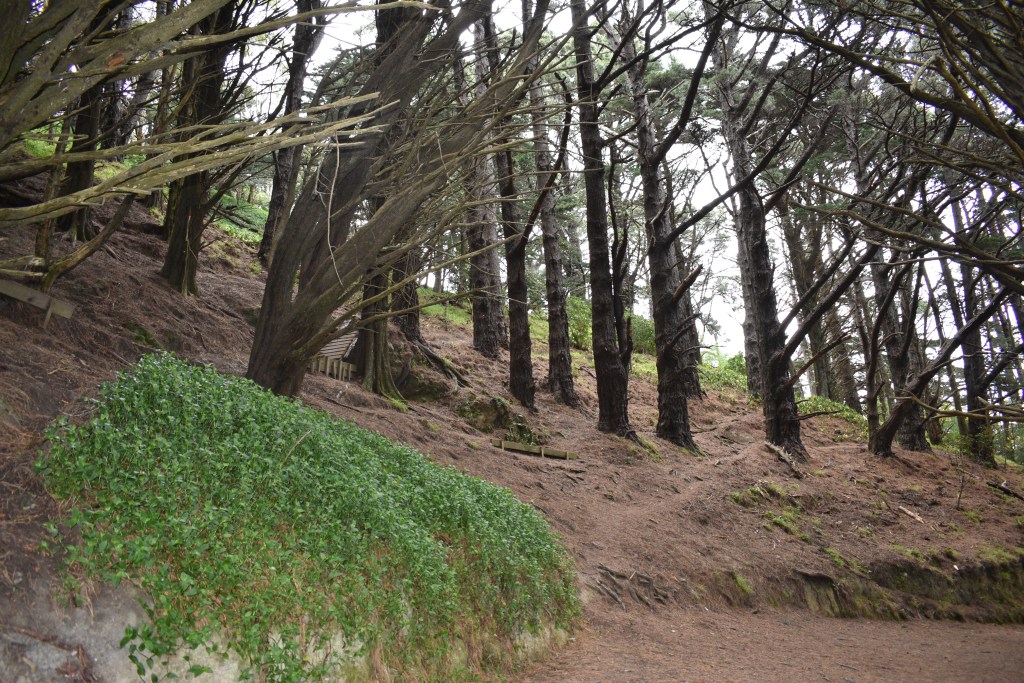
I thought that Wellington really wouldn’t be very suitable for the elderly because it’s so incredibly steep everywhere. I discussed this with a man out walking his dog who told me that a lot of older people, including his parents, live further along the coast at a town that’s flatter.
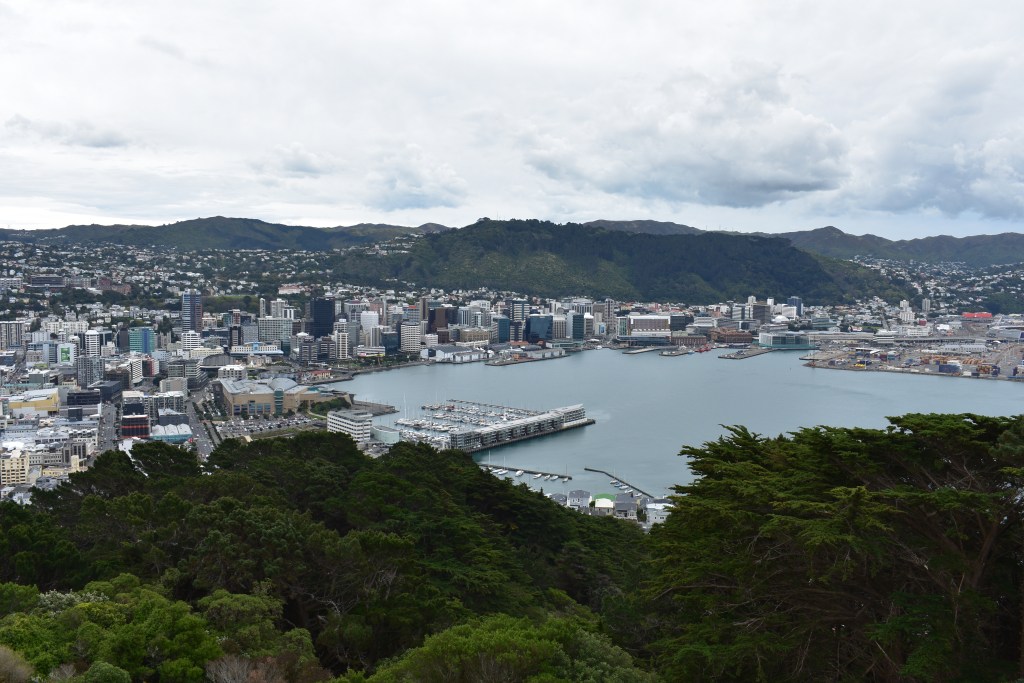
View of Wellington harbour from Mt Victoria 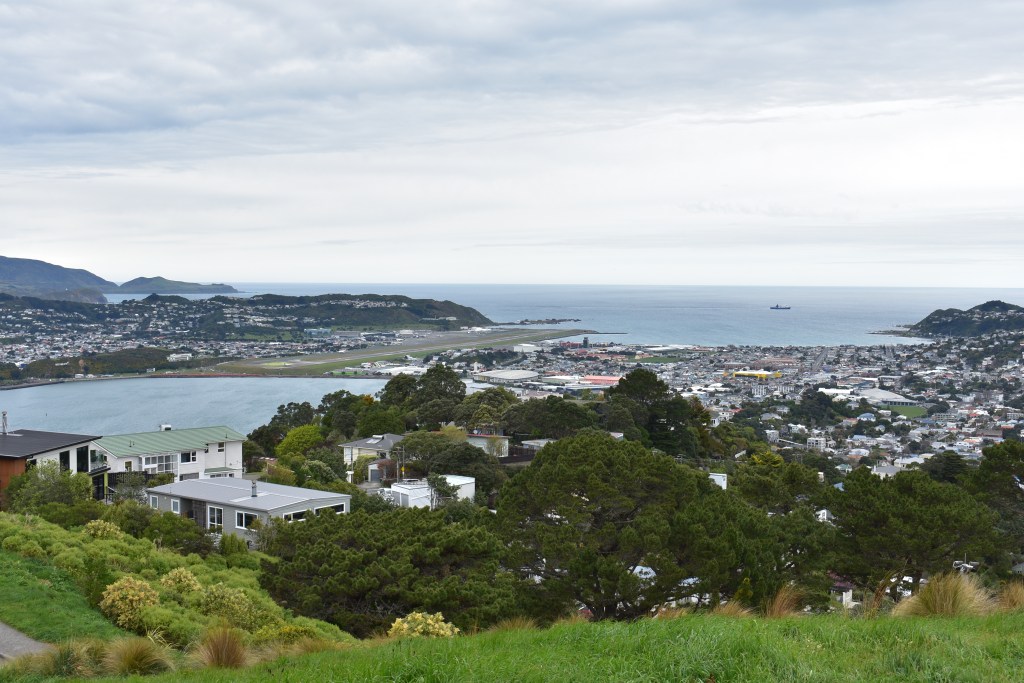
View of Wellington airport from Mt Victoria
I came down from Mount Victoria to Oriental Terrace as Rosemary had suggested it was worth seeing St Gerard’s Monastery there. It didn’t appear to be open and there were roadworks going on outside it. This little street led to Oriental Parade, the eastern end of the harbour. I walked along there for a bit but was accompanied by the traffic so retraced my steps and stopped for tea and a ginormous cheese scone (saving half for later, all the cakes and scones in NZ are substantial portions) at a bar/cafe on a boat. I continued walking to the harbour area passing the main museum here, Te Papa, which I had visited back in 1999 (it having first opened in February 1998) on a brief stop in Wellington en route to Rarotonga. Just along from there was a small museum (Wellington Museum) which Rosemary had advised I shouldn’t miss, and I spent an interesting hour in there before it closed, mainly about social and maritime history. I learnt that in 1968 the ‘Wahine’, an Inter island ferry, had sunk in the harbour with the loss of 51 lives. Unfortunately I couldn’t watch the film about it as there was a group of children using the area for rehearsing of a play.
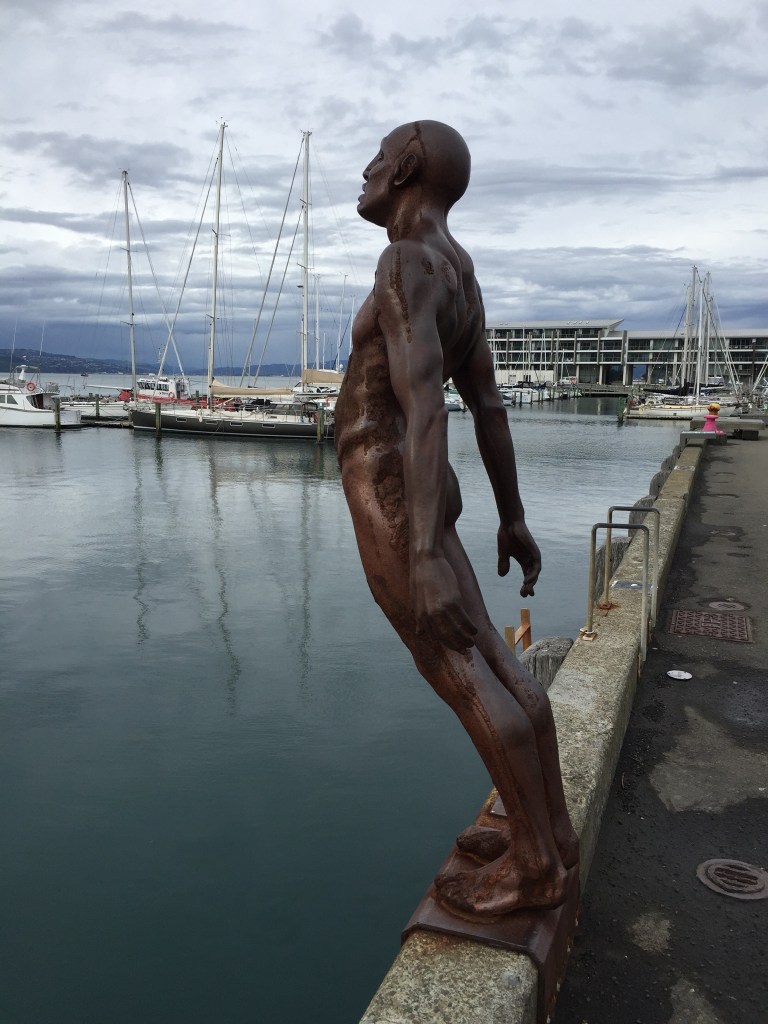
‘Solace in the wind’ by Max Patte overlooking the harbour
Following Rosemary’s advice I checked out the restaurants in Cuba Street and plumped for a vegetarian one called ‘Herbivore’ where I enjoyed a lovely vegetable tagine and glass of red. I got the number 2 bus back and noticed that I’d walked 10 miles.
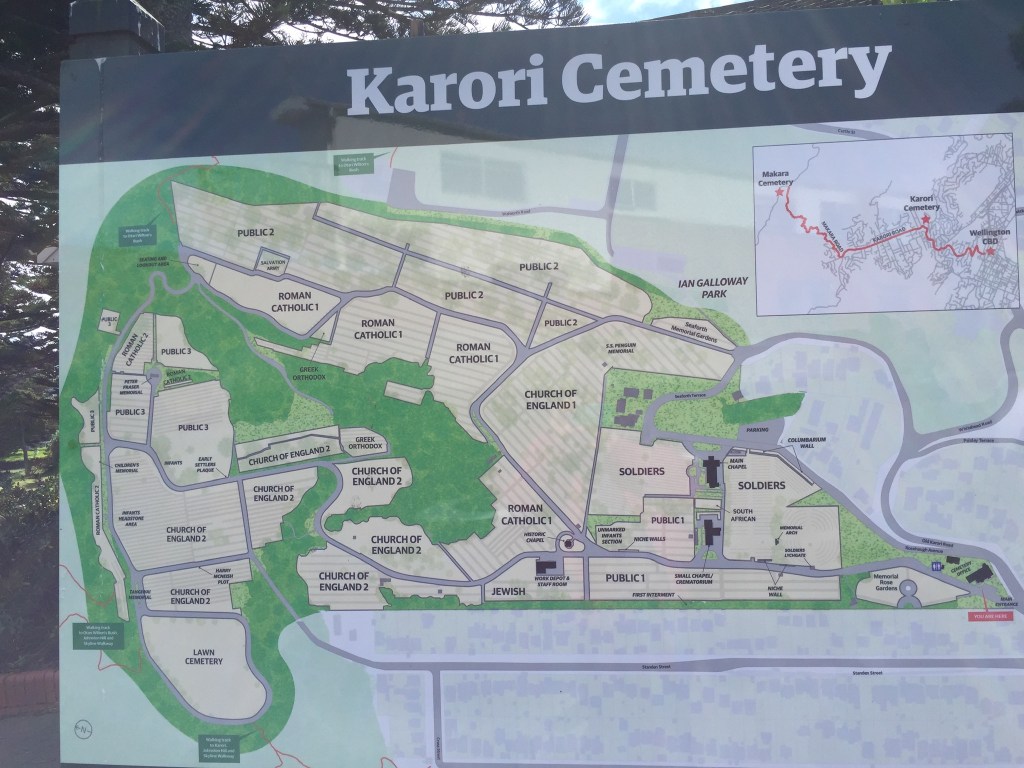
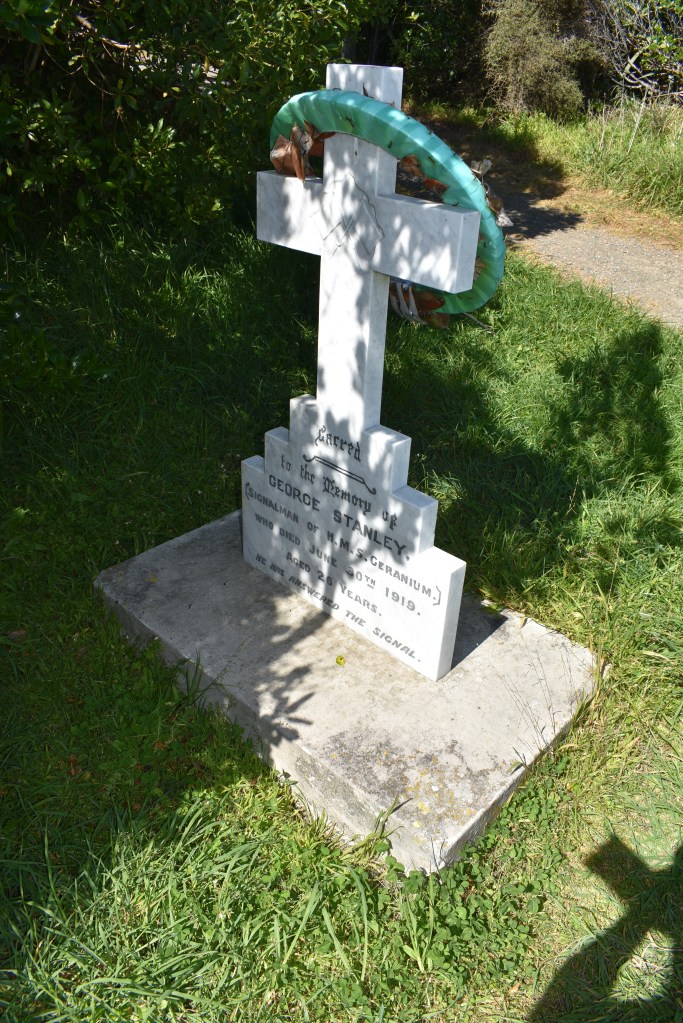
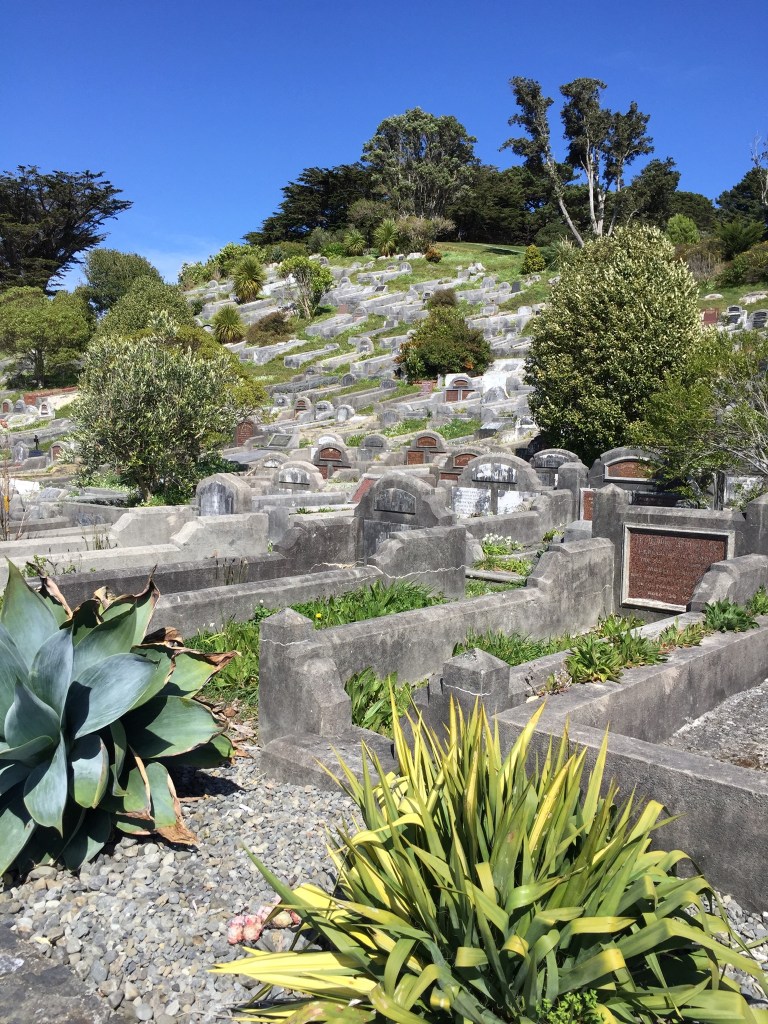
Just around the corner from the house is Karori cemetery, part of which I can see from my room which faces the street. Harriet had told me it’s very interesting and has the graves of some early settlers so on Wednesday I headed there first. It’s huge, in fact it’s NZ’s second largest cemetery established in 1891 covering 40 hectares with over 83,000 people buried there. It includes areas set aside specifically for people of the various denominations outlined on a map at the entrance:
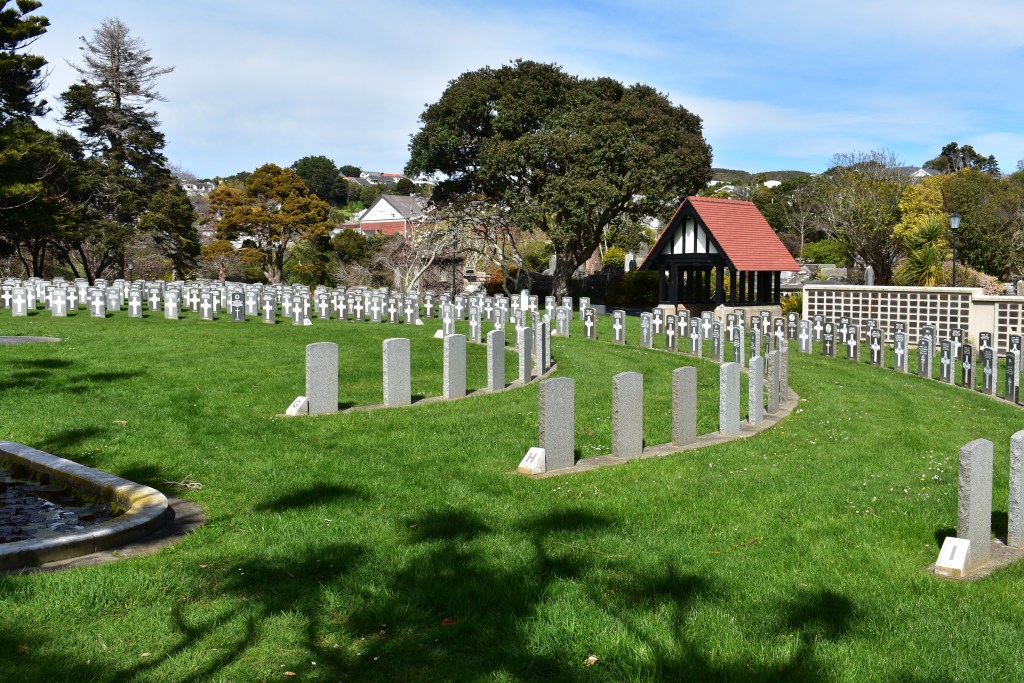
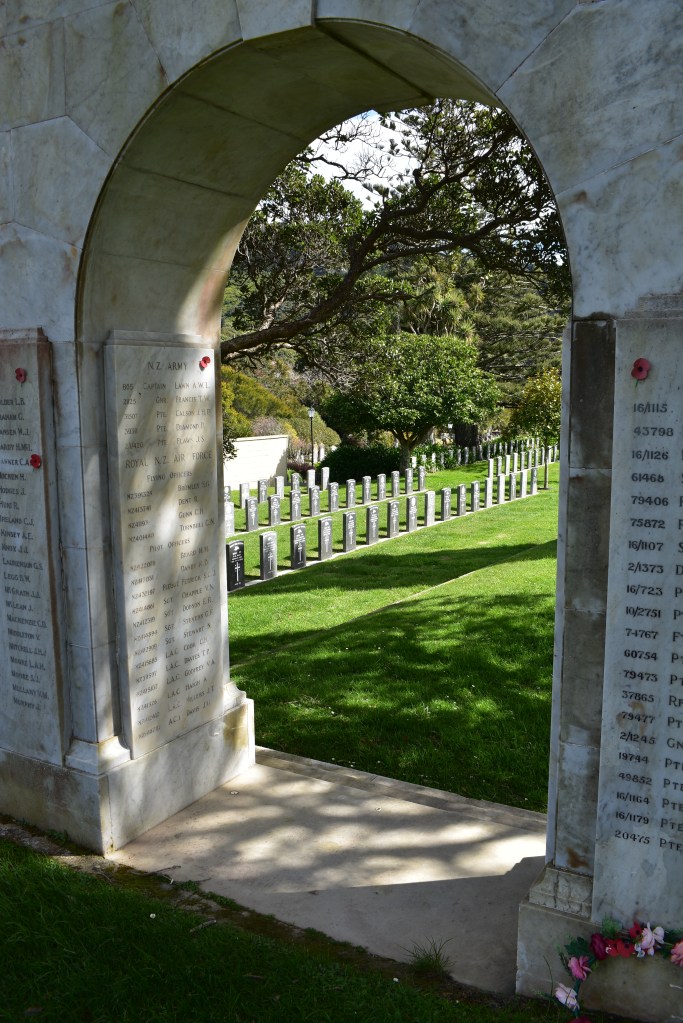
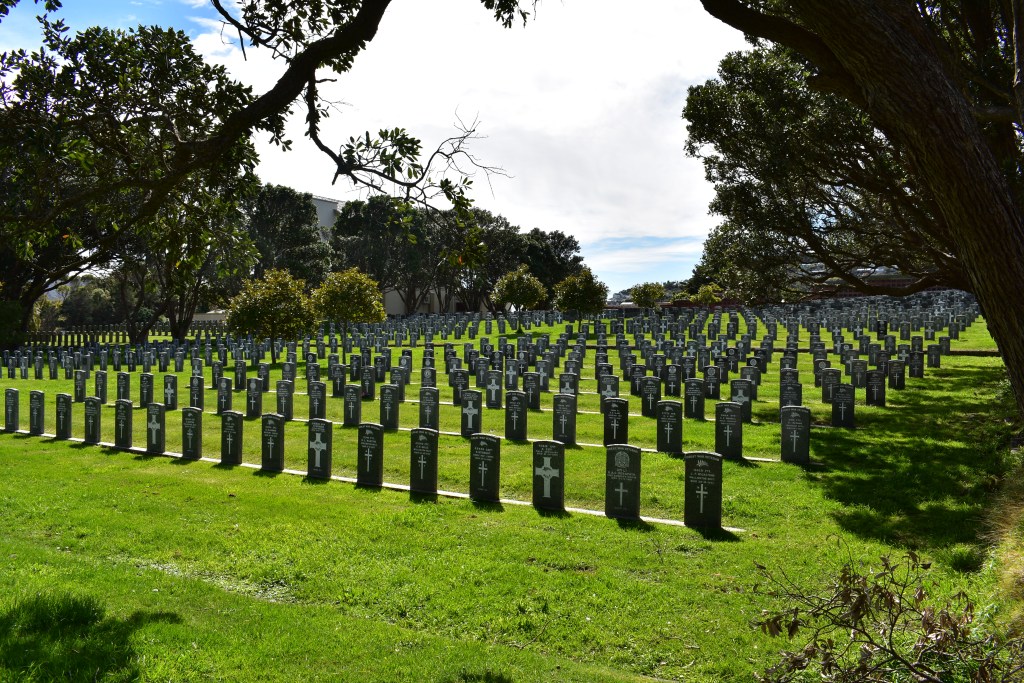
Of interest to me particularly were the soldiers’ graves, mainly of those who were killed during the 1st & 2nd World Wars and those who had died later having served. It was very moving:
From there I walked to the Botanic Garden which I remembered visiting briefly (every stop being brief) on the Contiki tour 26 years ago. It was established in 1868 and covers 25 hectares with protected native forest, exotic trees, plant collections and seasonal displays of bulbs and annual plants. It’s a Garden of National Significance and was the first public garden to be classified as a historic area by the NZ Historic Places Trust.
Again, it’s very steep up and down and at this time of year (Spring) just starting to get colour which was mainly a large area in the seasonal flower beds of tulips. Sadly the Lady Norwood Rose Garden (named after the wife of a former Mayor of Wellington) was minus roses but there are more than 300 varieties which can be seen from November – May. There are a lot of paths and you could certainly spend a whole day walking them all.


Lady Norwood Rose Garden 
Peace Garden 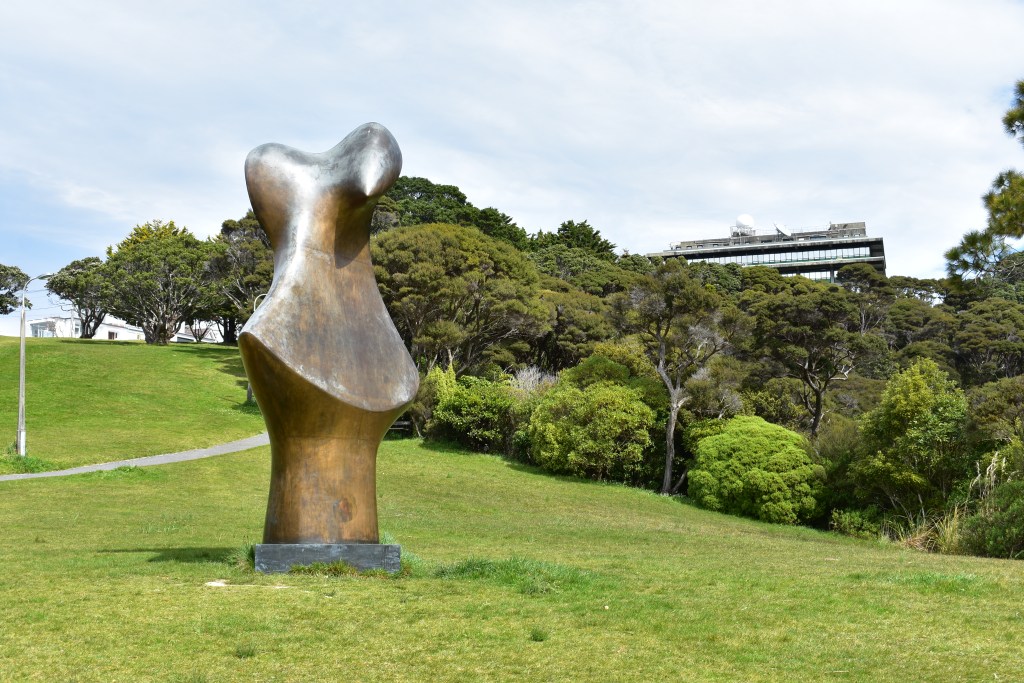
‘Bronze Form’ Henry Moore
Of course I had to sample the cafe, which was by the rose garden, then walked along part of the sculpture trail path, which included a Henry Moore, leading uphill to the Cable Car Museum and Cable Car itself where this amazing tree was:
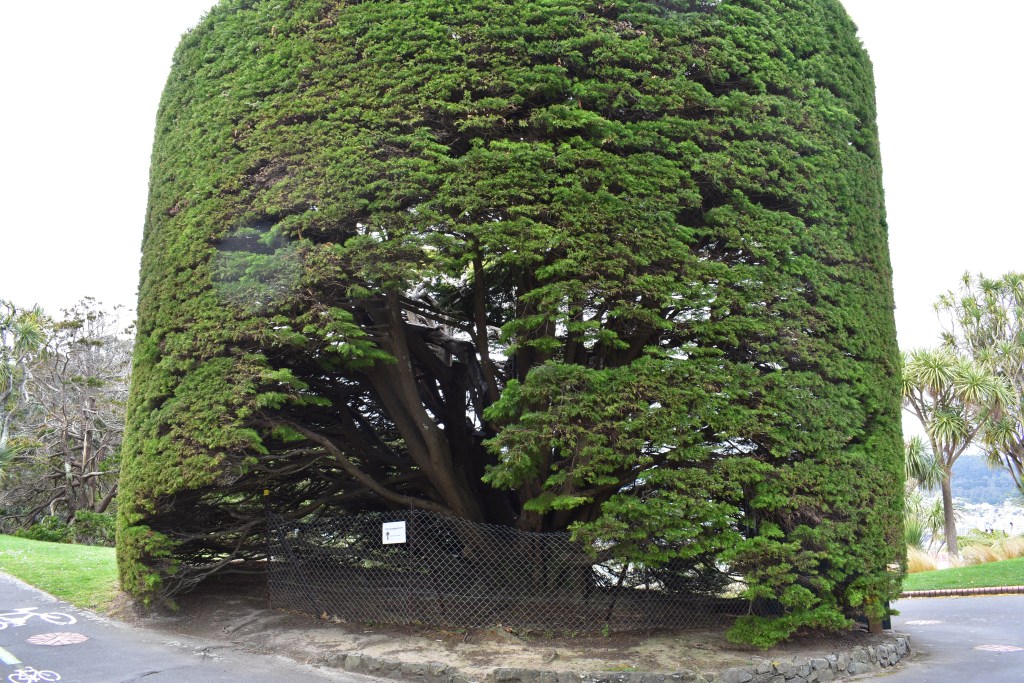
The museum is located in the original winding house for the cable car that operated from 1902 – 1978 when new technology took over. The building stood vacant until it was opened as a museum in 2000. The original cable car was an engineering feat and gave access to the steep hills above the town centre for new homes and farmland. It was enormously popular from the day it opened and understandably more peopled travelled uphill than downhill, so they were charged twopence to go up and a penny down.
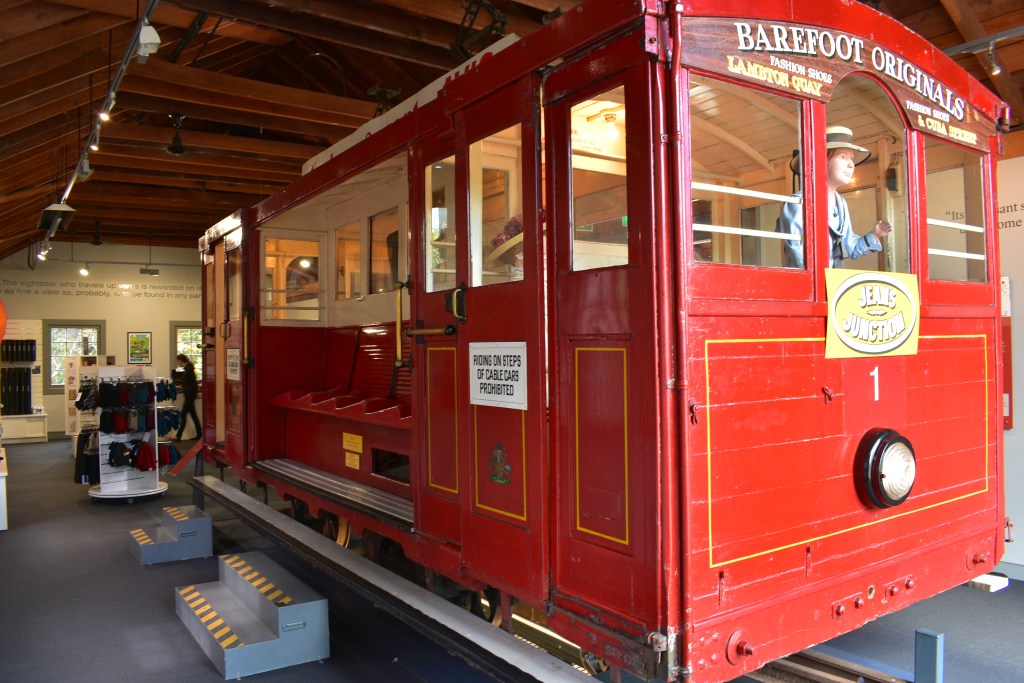
The Botanical Garden and cable car are my main memory of my visit to Wellington 26 years ago. I also remember the buildings overlooking the harbour being painted in all shades of pastel colours, however they no longer are. When I mentioned this to Harriet she told me a lot had changed in 26 years!
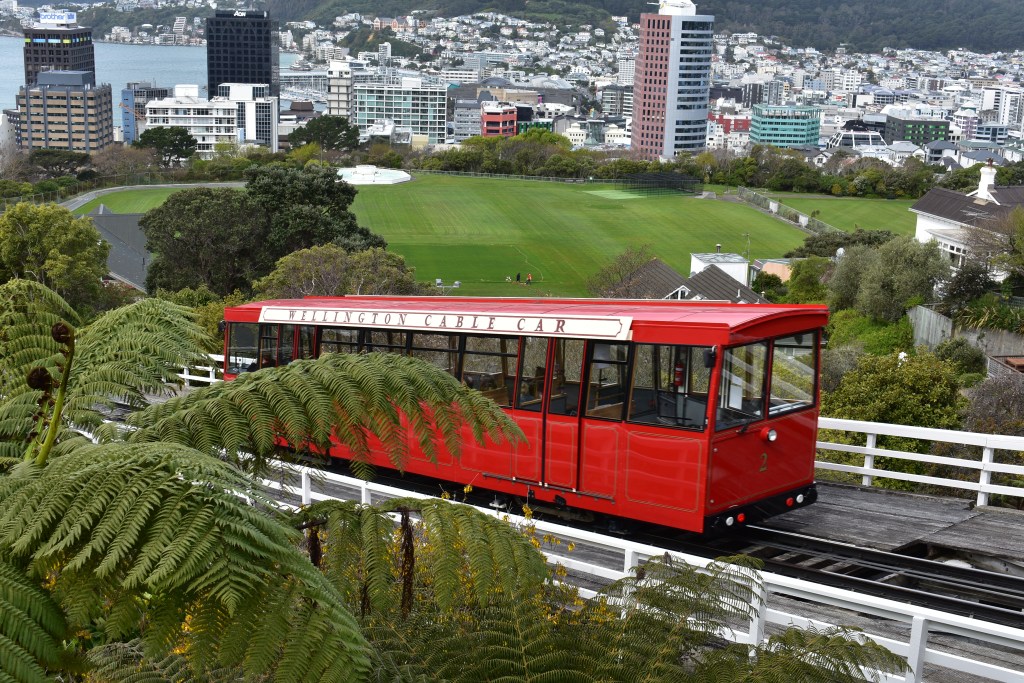
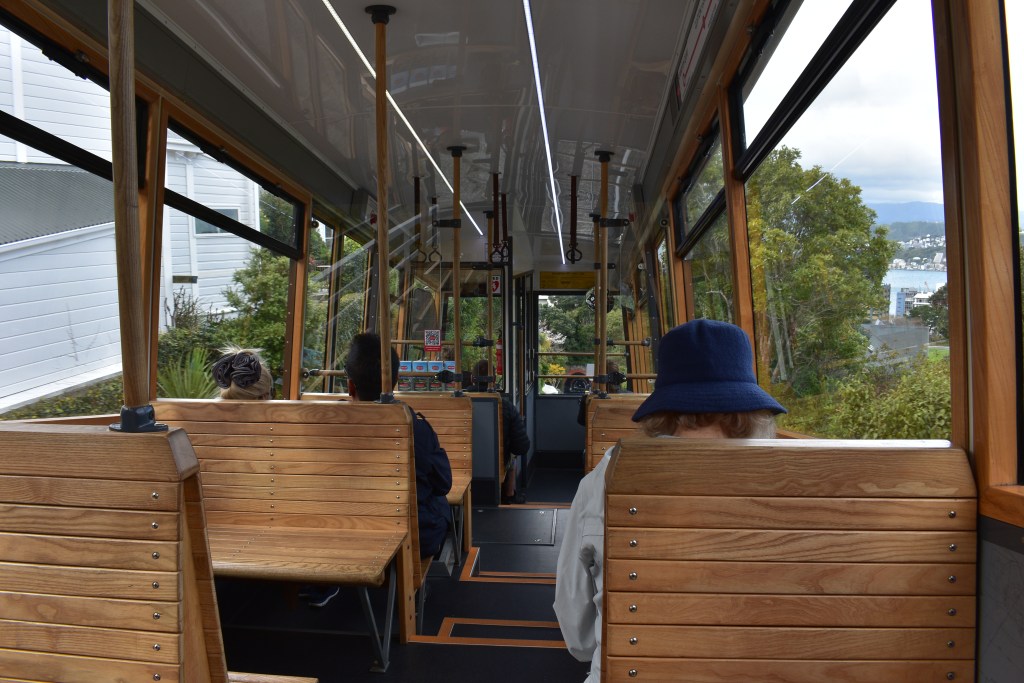
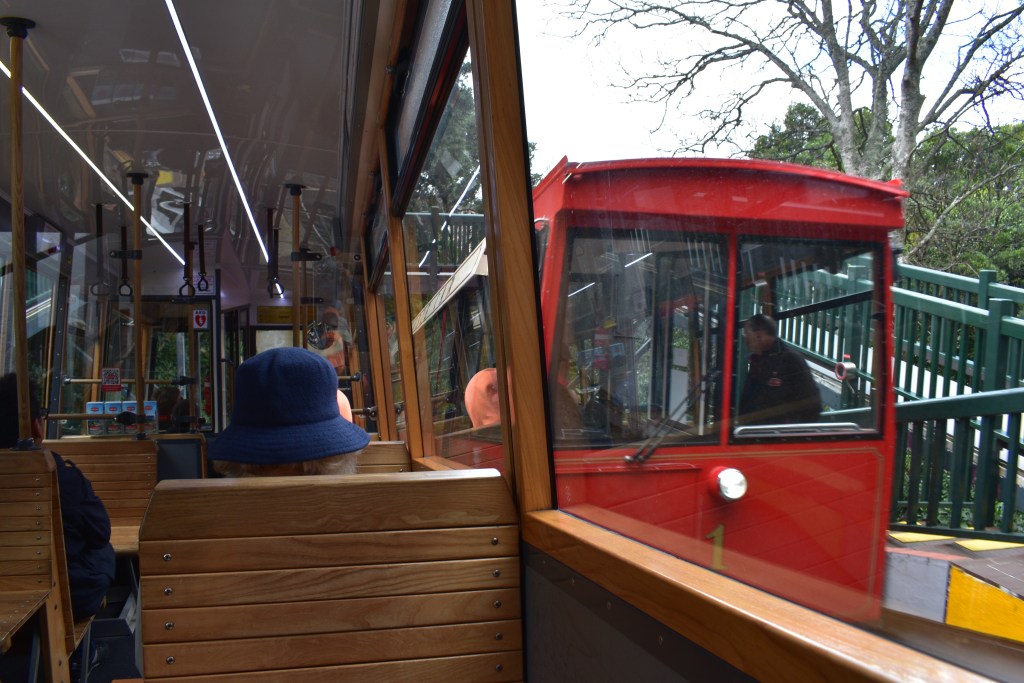
I took the cable car down to Lambton Quay, a main shopping street, and walked along to the Beehive and Parliament Buildings. As luck would have it I was just in time for a free tour starting at 3pm and was taken round by a rather impatient guide who rolled her eyes when one particular man (French from the US with a young Philippino wife and baby son) asked questions she’d already given the answers to. Well, she was quietly spoken and English not his first language. At the end of the tour I sat in the gallery for a while to listen to the goings on in the chamber, but there were only a handful of MPs and it was pretty dull having gone into the middle of a particular debate. What is an interesting difference between them and us is that they spend 6 months going through the various stages of debating new laws and invite members of the public in to give their opinions, which are actually listened to!
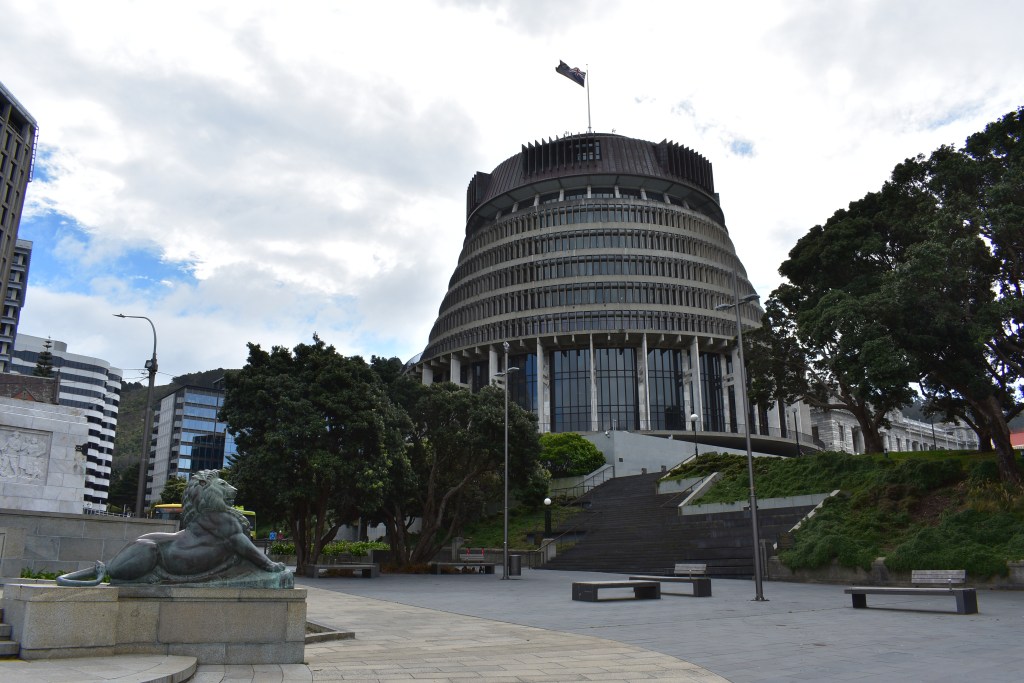
The Beehive 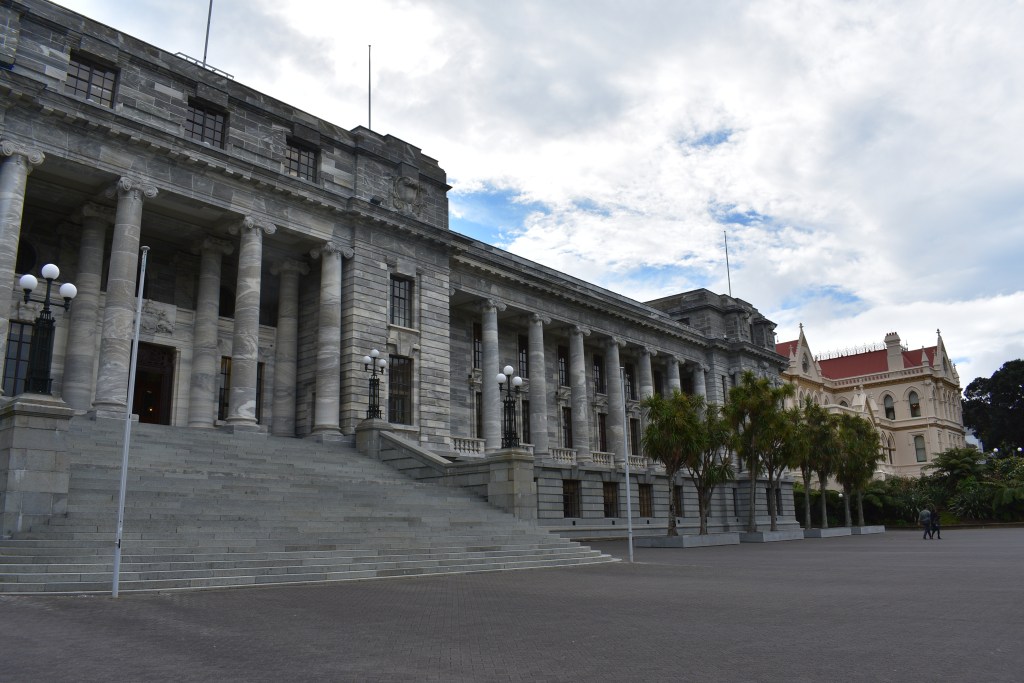
Parliament Buildings
I briefly checked out Wellington’s Main Library which was soon to shut thinking I’d go back there and see it properly another day (I never did unfortunately, I like exploring libraries as much as cemeteries!) and then walked to Katherine Mansfield’s birthplace to check it out for a possible visit but it is currently closed for refurbishments. I walked along Thorndon Quay and took the no.2 bus back ‘home’ with the commuters.
Despite Thursday being a lovely day I decided to go to the Te Papa Museum, little realising I’d spend all day in there. I had briefly stopped off in Wellington when I was travelling in 1999 mainly to see this museum, which opened in February 1998, which was well worth seeing and had enjoyed it then. It’s located on the harbour, has 5 floors including Maori stories and artefacts, a fabulous nature exhibition and art plus changing exhibitions.
I had heard from several quarters that their Gallipoli exhibition was worth visiting so went to that first. It was extremely well done and included giant figures (made by the people who made Lord of the Rings props/masks etc amongst many other films, at the Weta workshop -more later) of real people who had served at Gallipoli and their biographies, and a very good telling of the sequence of events with models, videos and timelines. New Zealanders are justifiably proud of and moved by the events at Gallipoli as they lost so many New Zealanders who served there with Australians (ANZACs) along with Great Britain and her other allies.
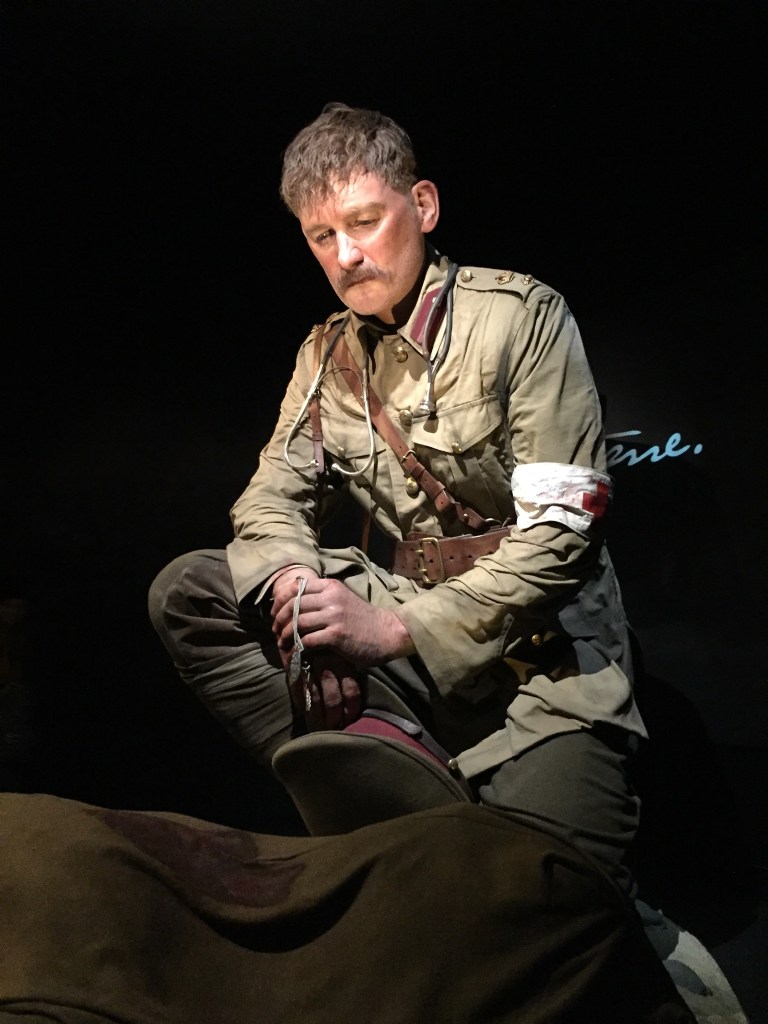
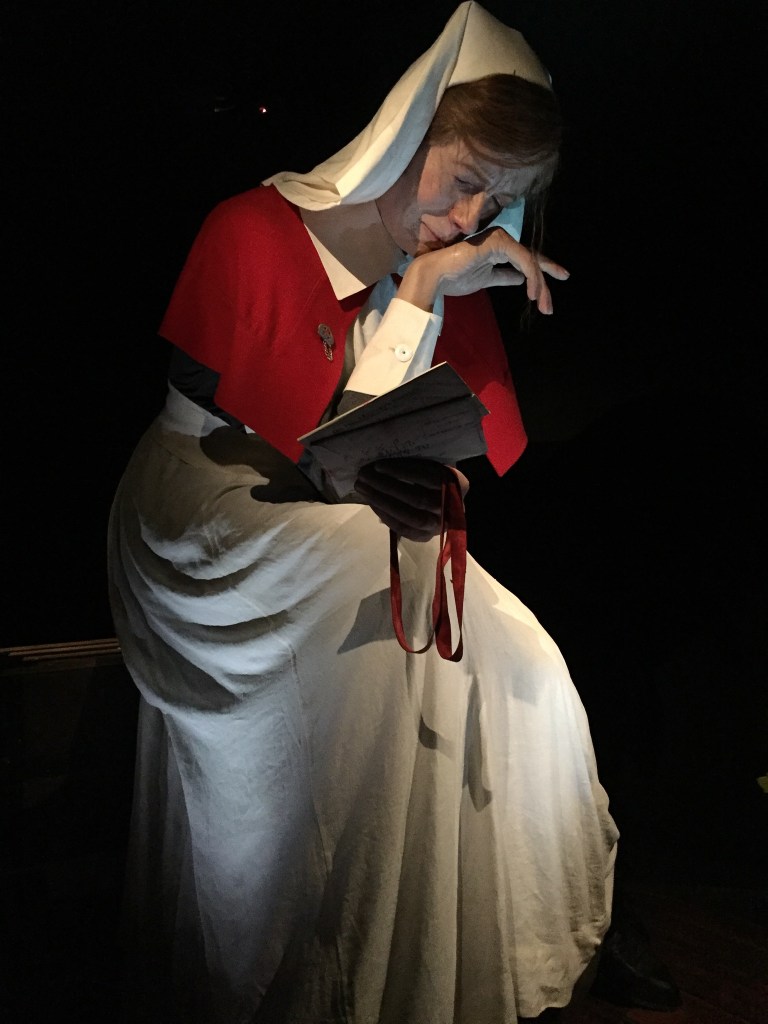
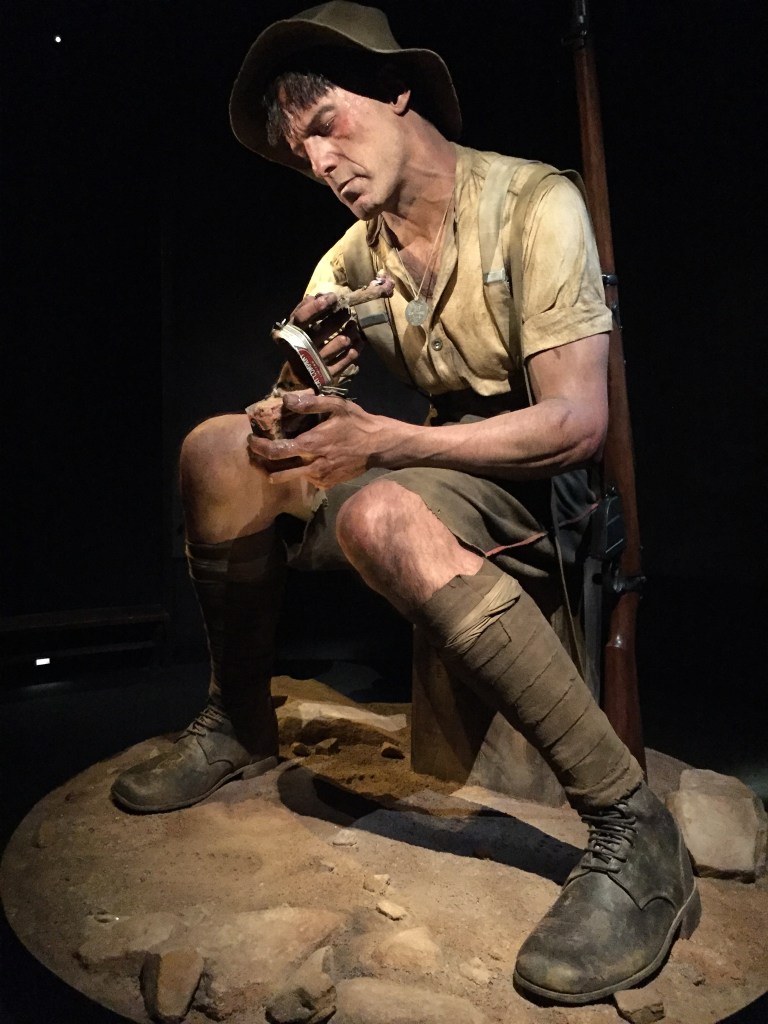
I went off in search of an early dinner and settled for The Crab Shack, which had a nice vibe, although I didn’t have crab but grilled fish. Then made my way to the TSB Arena for the opening night of WOW (World of Wearable Art) which is an internationally renowned competition attracting entries from over 40 countries and I’d been told to try to go. I managed to get the second cheapest of the seats ($99) which was near the front and to one side of the stage. It was quite an extravaganza, preceded by a very good jazz band, with amazing lighting, music, choreography and even some acrobats and singers who came down from the ceiling on ropes. Needless to say the costumes were nothing if not extravagant and I really enjoyed the event. I kept thinking how much my friend Caroline (who did a Textiles degree) would have enjoyed it too. There were small revolving circles set all around the stage and the models moved about so everyone was able to see, not just those in the posh seats with champagne dinners. Unfortunately photography wasn’t allowed but there were some costumes from previous years on show outside the venue:
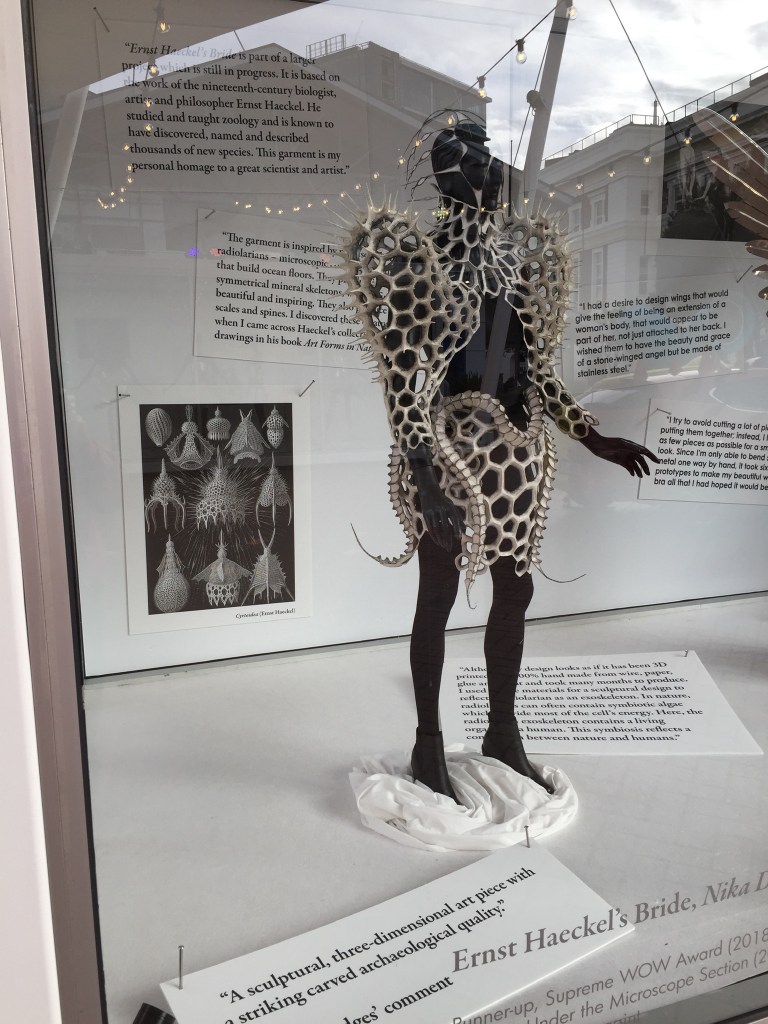
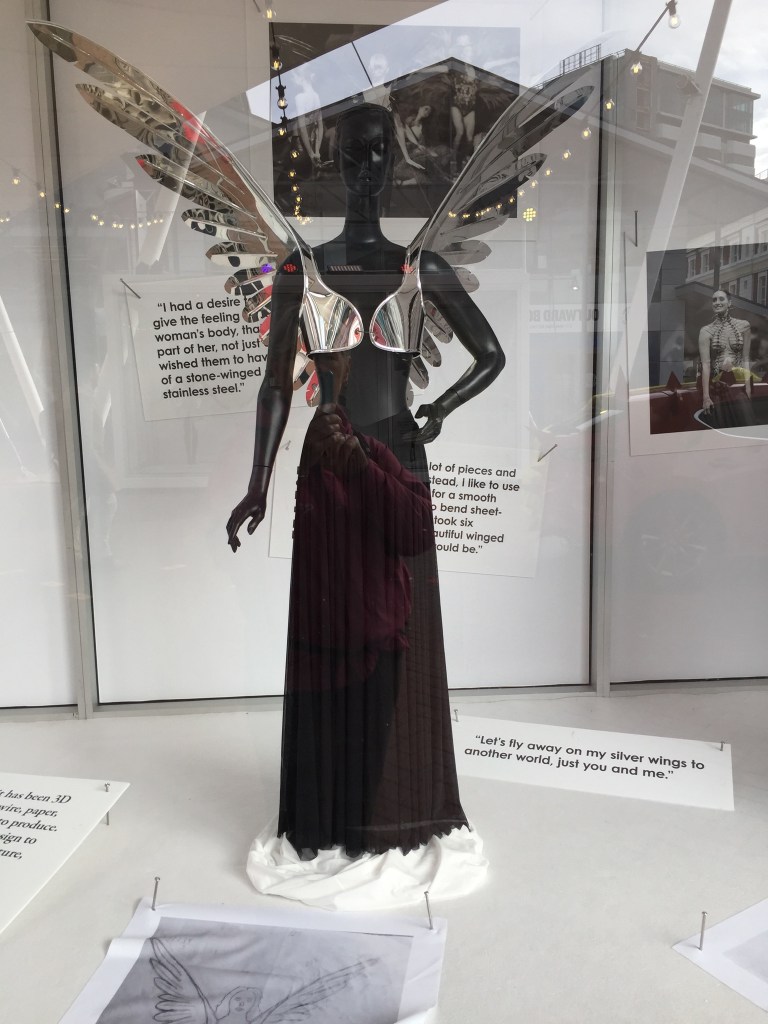

I was seated next to a lady called Pam who was with 8 other women, all from Nelson, who had flown over especially for the show. Pat told me that they all meet for lunch on a Friday and occasionally have jollies like this one. WOW actually began in Nelson 30 years ago but became too big for the town so moved to Wellington. There were 4 designers exhibiting from GB: Anna Von Hartizsch, Jack Irving, Louise Buford and Louise Dyhrfort.
Another suggestion from Rosemary from the i-Site office had been to take a ferry to Eastbourne, stopping at Somes Island (Matiu – Maori name), in the middle of Wellington harbour, en route. I made the 10am ferry by the skin of my teeth receiving some dirty looks from passengers as I ran on. Harriet had undersold the island to me when I told her I was going but was glad I didn’t listen! It was a glorious day. It was just a short ride to the island with some great views of Wellington:
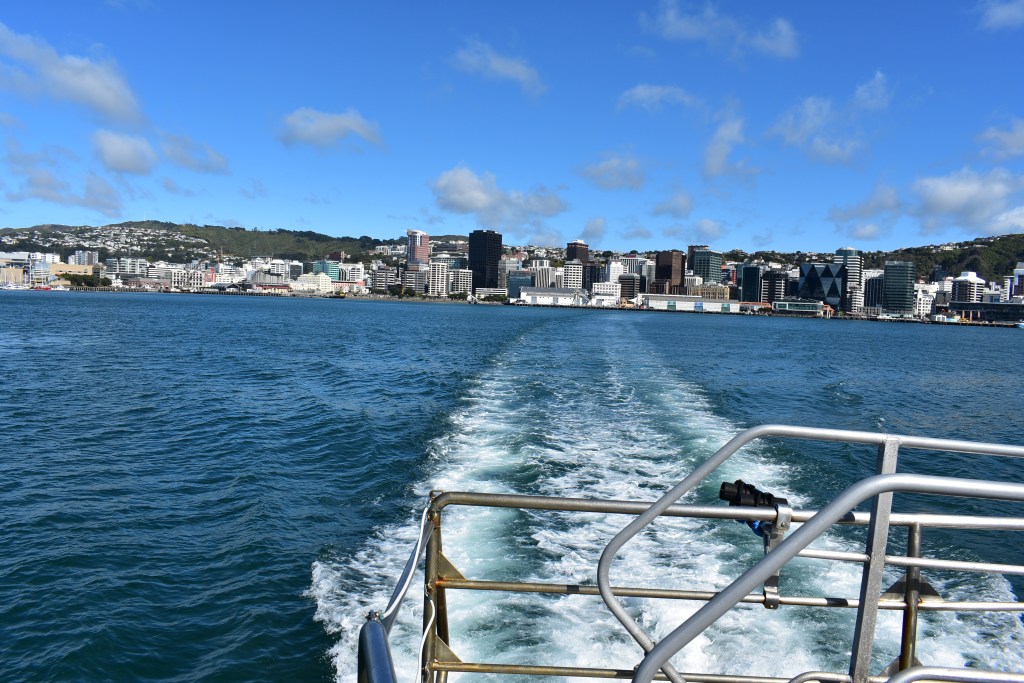
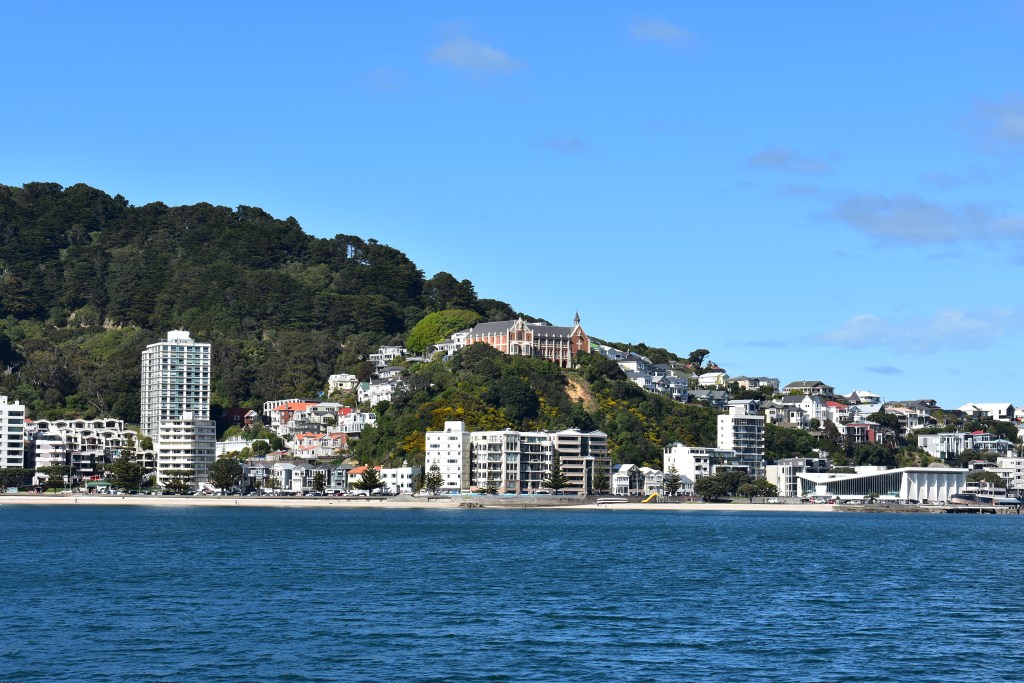
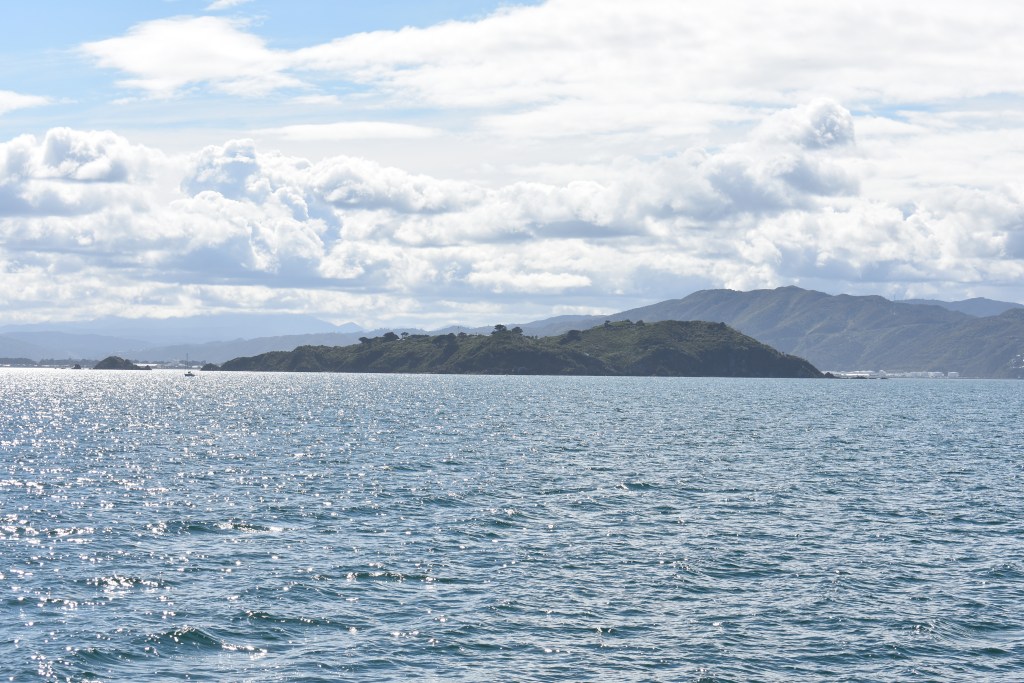
Somes Island
The island had been occupied for centuries by successive Maori tribes but, in more recent times, it has served as a human (leprosy) and animal quarantine station, an internment camp during World War I & II and a military defence position. In 1995 it opened to the public as a scientific and historic reserve. There are several walking tracks, lookouts, a lighthouse, a somewhat sad visitor centre and accommodation for overnight stays. There was also a box from which, when you turned the handle, you could hear stories told by an elderly woman who had been a Wren during the last war and stationed on the island (degaussing station) to warn allied ships where mines were placed.
A few pics from the island:
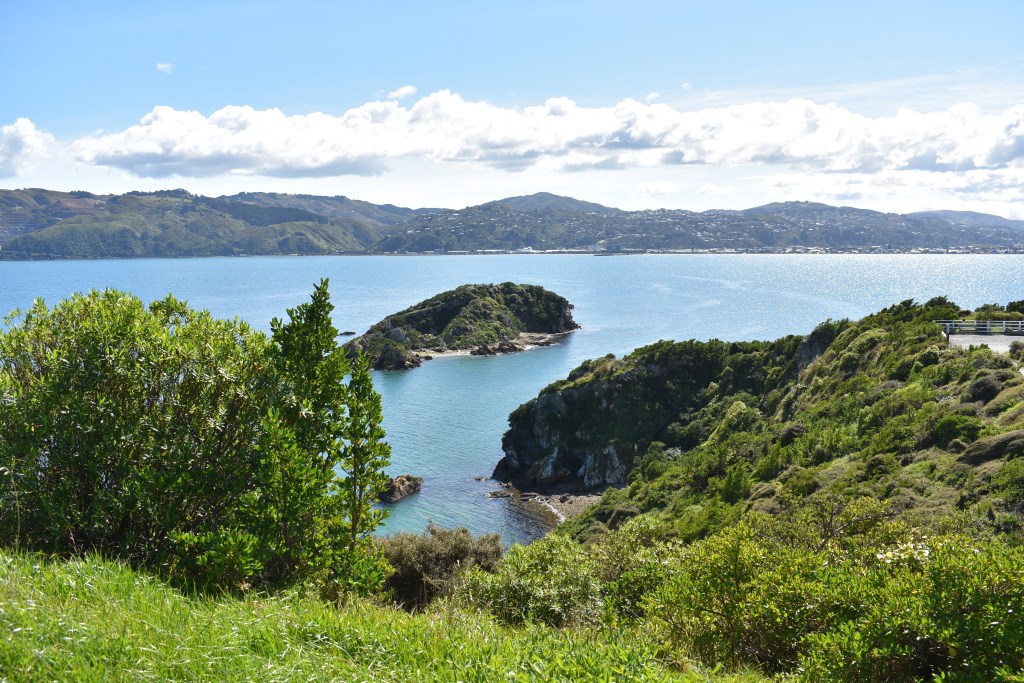
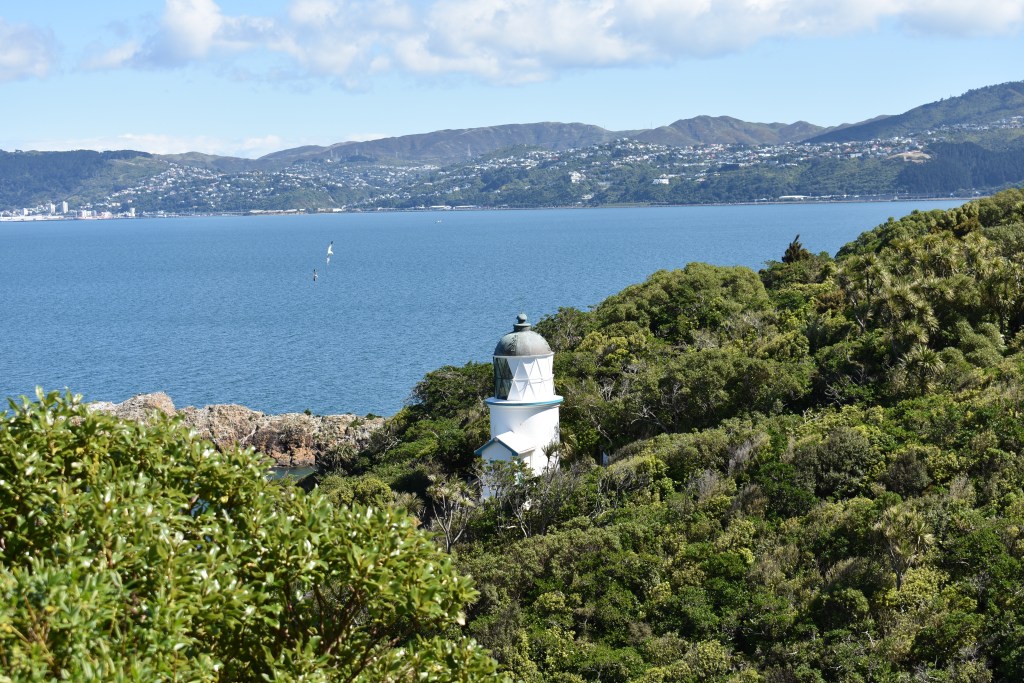
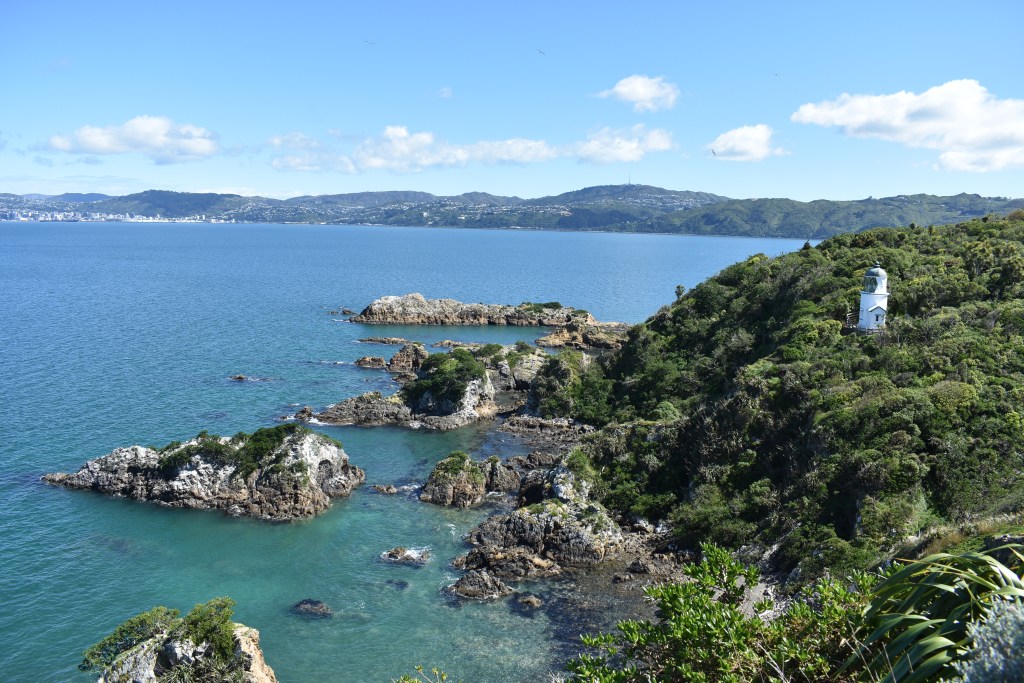
I picked up the next ferry that stopped at the island, after just under 2 hrs there, and went to Days Bay, the drop off point for Eastbourne.
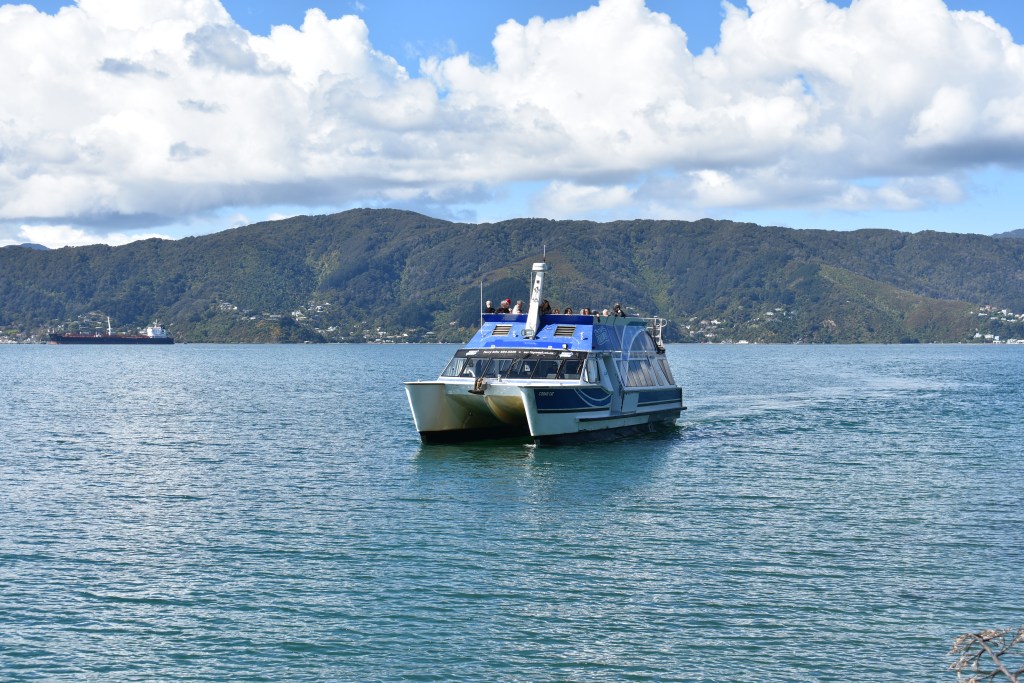
There was a large cafe just opposite the ferry drop off and, as it was lunchtime, I figured there would be a crowd so walked along to Eastbourne. Now this Eastbourne bears no resemblance to ours. It is a really small town, very quiet with just a few cafes and shops. It’s apparently been a favourite local escape for generations. After lunch in a French cafe I walked about 2 miles along to a large rock, Lions Rock, which did look like a British Lion. On the beach was an enormous amount of driftwood, with protected areas for nesting little blue penguins and dotterels, although I couldn’t see any – I think it was slightly too early.
There was a memorial (the foremast of the ferry) to the 51 people who died when the inter island ferry, the Wahine, foundered and sank on 10 April 1968 during the worst storm in local memory as I’d learnt at Te Papa:

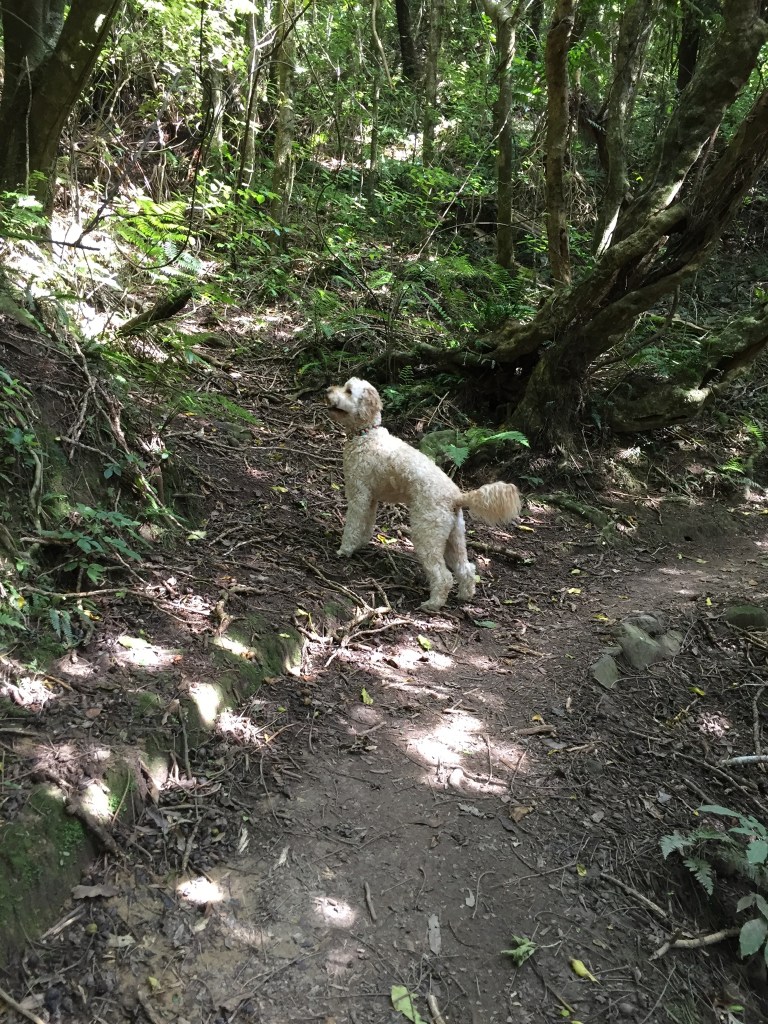
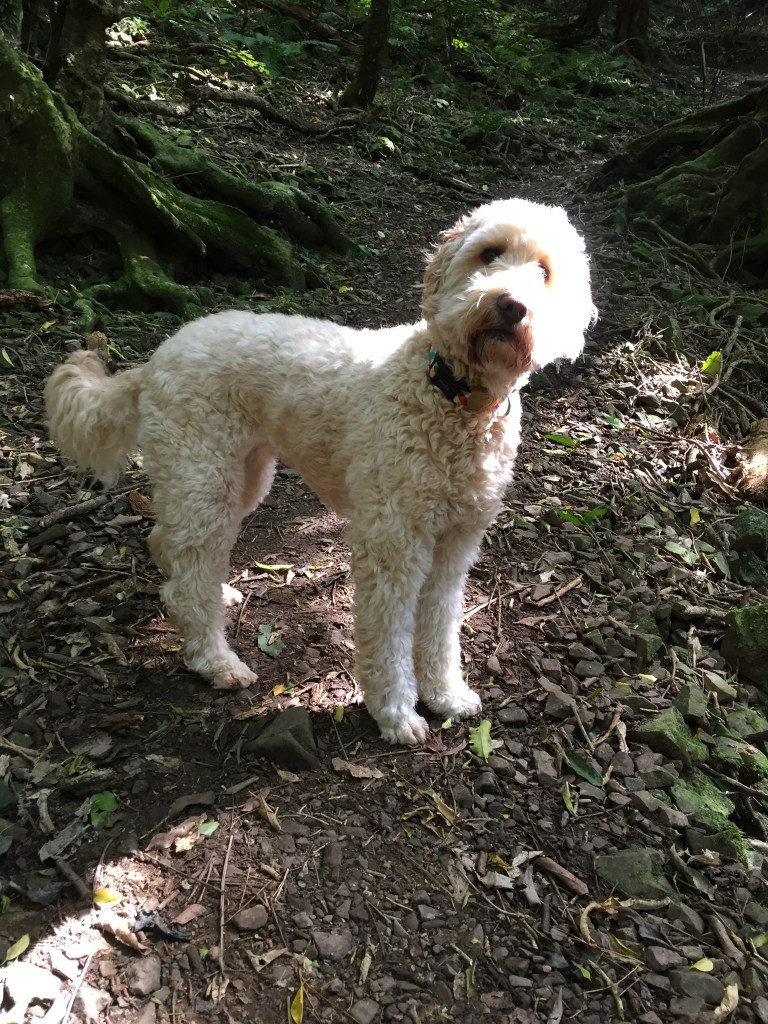
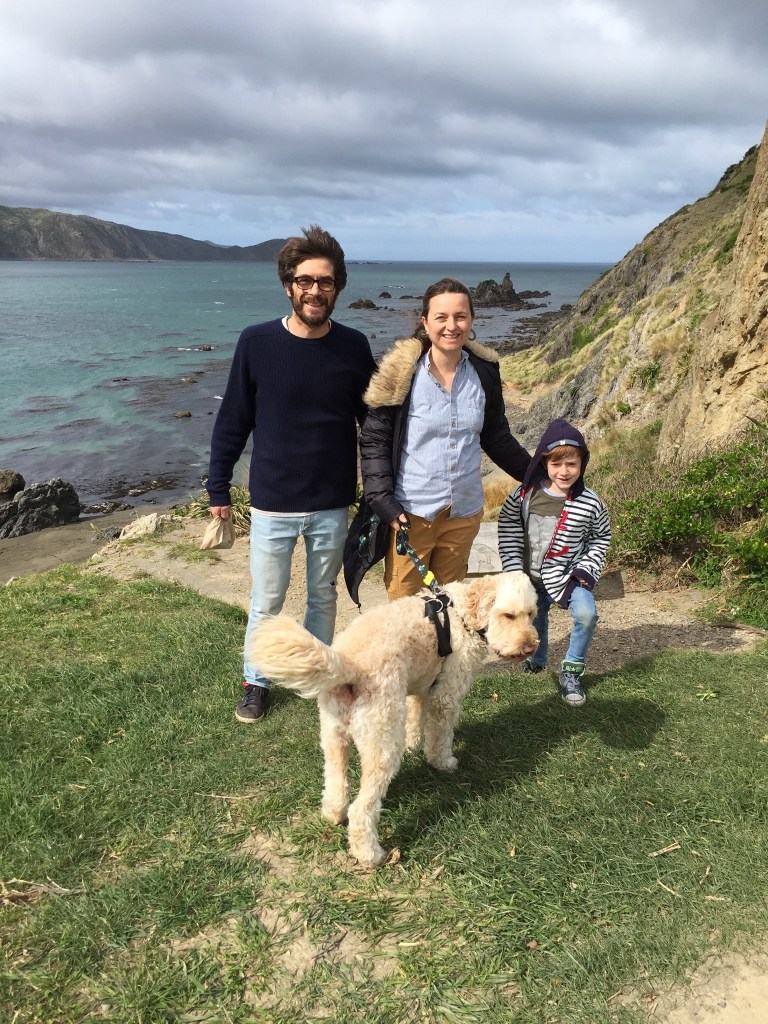
On Saturday, I decided I’d have a slower day as felt as if I’d been rushing everywhere but wanted to make the most of Wellington as there’s so much to do. I offered to take Nora out for a walk – the family’s 3 year old Goldendoodle (golden retriever crossed with poodle) although Harriet calls her a Retradoodle. She’s a lovely dog. Harriet explained one of the regular walks she does and I hadn’t realised what amazing walking could be accessed at the other end of their road. There was a steep and winding forest path up onto a ridge which was quite moorlandish with fabulous views. I met a lovely lady called Veronica who came up behind me and assumed she’d been running, but she was just walking quickly. She told me she and her husband left Surrey over 30 years ago and have lived in Wellington all the time where their children were born. Sadly, her husband has a form of leukaemia and had recently had a stem cell transplant which was his only hope of survival. He’d been in hospital for quite a few weeks and so she does this walk Most days to clear her head before going to the hospital. I had a bit of a chat but could tell she wanted to be on her own after a while and wished her well. It does seem such a shame to occasionally connect with people who I’d possibly form friendships with if I wasn’t moving on, never to see again in this lifetime.
It was then downhill, passing signs for other walks such as the Skyline Walk, and I wished I had longer in Wellington so I could do that. There was a path leading into Karori cemetery so I was able to explore more of it. It’s absolutely huge and of course I had trouble finding my way out and Nora must have wondered why I was walking back where we’d already been. As usual following my nose didn’t work.
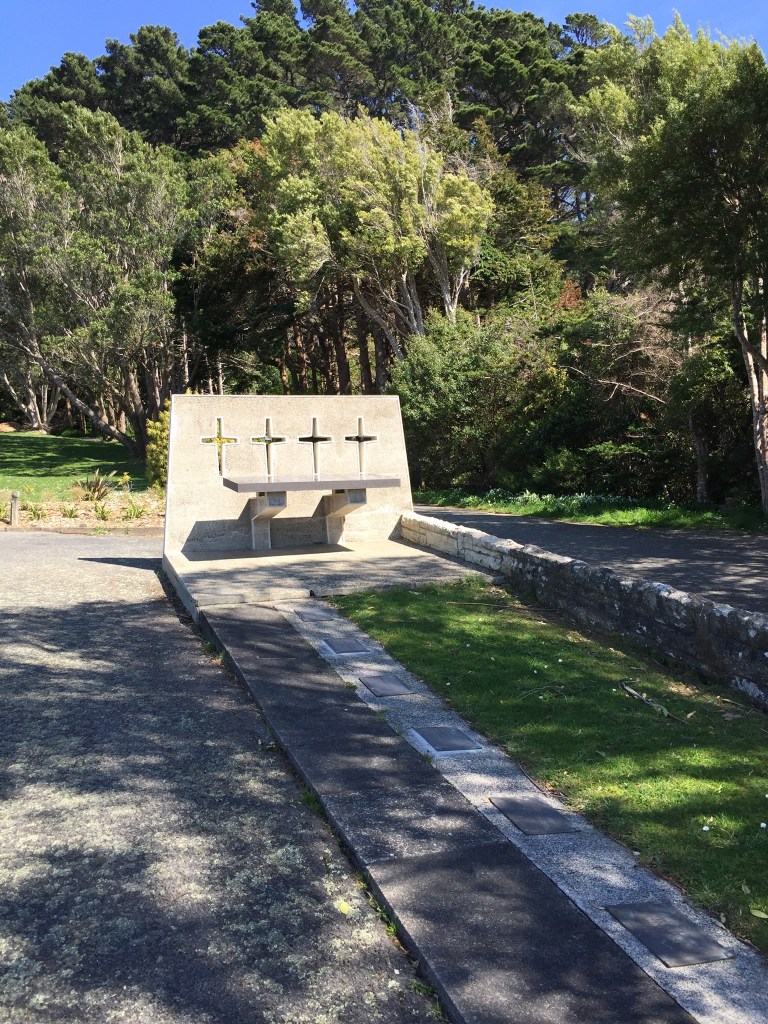
I came across a memorial to the victims of a railway accident when the Wellington-Auckland overnight express train plunged into the flooded Whangaehu River at Tangiwai on Christmas Eve 1953 killing 151 of the 285 passengers. There was a picture of Prince Philip attending the state funeral for the victims as he and the Queen had recently been touring NZ. There was also a large memorial to Peter Fraser (Prime Minister of NZ from 1940-1949) and his wife Janet:
G 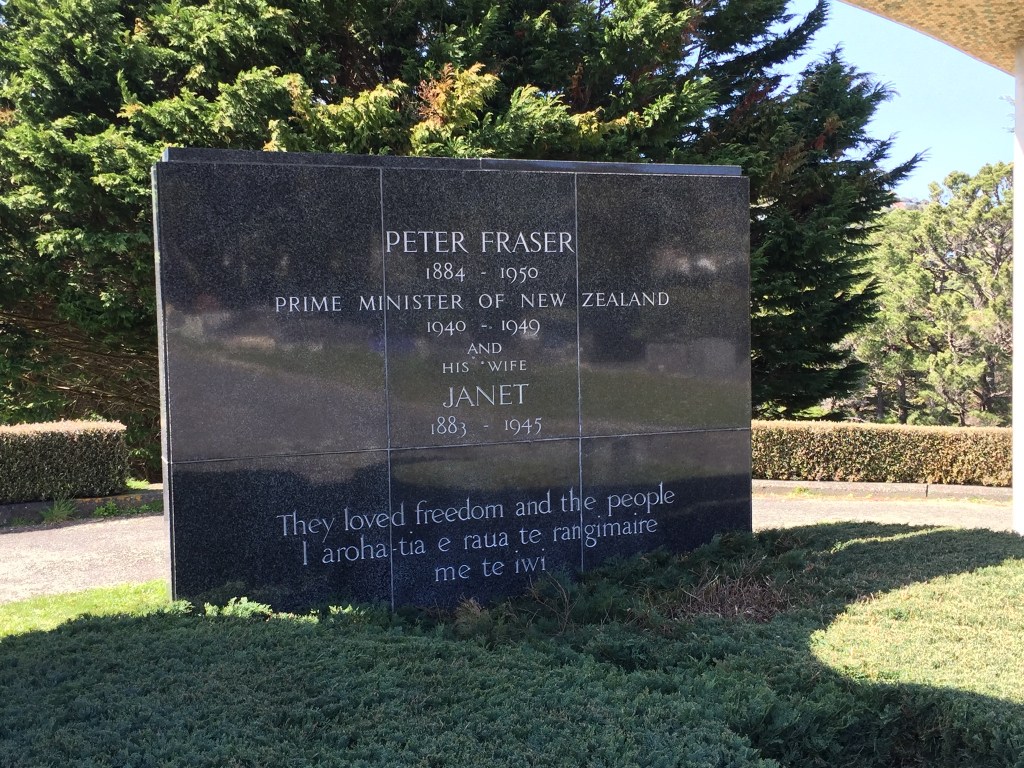
Sunday was my last day. At the last moment, just as I was about to leave for a bus, Harriet decided to drive James, Henry and I plus Nora the dog to Seatoun, an eastern suburb of Wellington, to show it to me and also let Nora have a run on the beach. We stopped first in Gipsy Kitchen, a nice little cafe (which Harriet said was the best in Wellington) for a quick bite to eat and I got something for tomorrow’s journey. The only thing that spoilt the cafe was the very loud pop music which seemed rather inappropriate for a Sunday morning – call me old fashioned! We then had a brief walk along the desolate, rocky and sand duney beach which Nora had a good run along and then they dropped me off at the Weta workshop based in Miramar (apparently quite an exclusive part of Wellington near the airport) where I’d booked into an hour’s tour starting at 12.00.
Although I’d never heard of the Weta Workshop before it’s where props and effects are designed and created for films, most famously for ‘The Lord of the Rings’. It was started in 1987 by a couple, Richard and Tania, from their one bedroom flat. Although the first film they worked on wasn’t a great success things improved and when Peter Jackson heard about their work and later James Cameron thing really took off.
We were guided by an American man who was very good at his job as most Americans in this line of work are. The tour started with a short video welcome from Tania and Richard, who seemed very down to earth, then our guide told us a potted history of the films they’d worked on. There were no artists working, although we were shown one of the workrooms, and we saw some of the props and full size models that had been made. It was quite interesting and it made me think I should look up a few of the films in the future, even watch ‘The Lord of the Rings’ trilogy the first of which I didn’t much care for, not being a lover of fantasy, as I found it rather scary so didn’t watch the others.
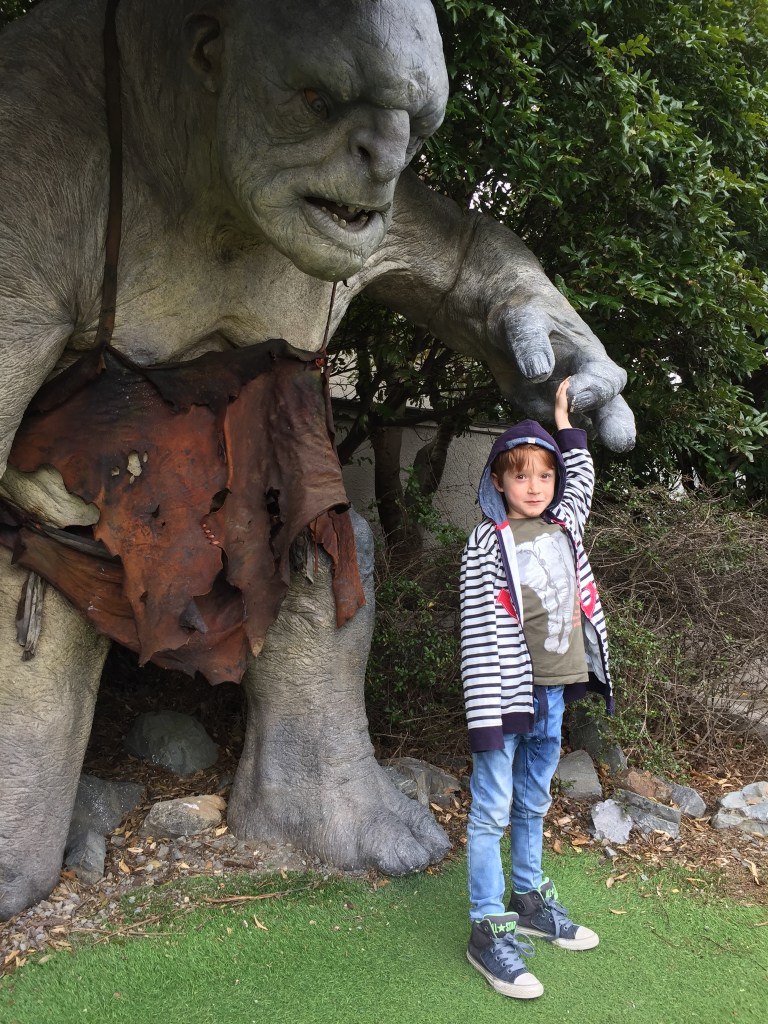
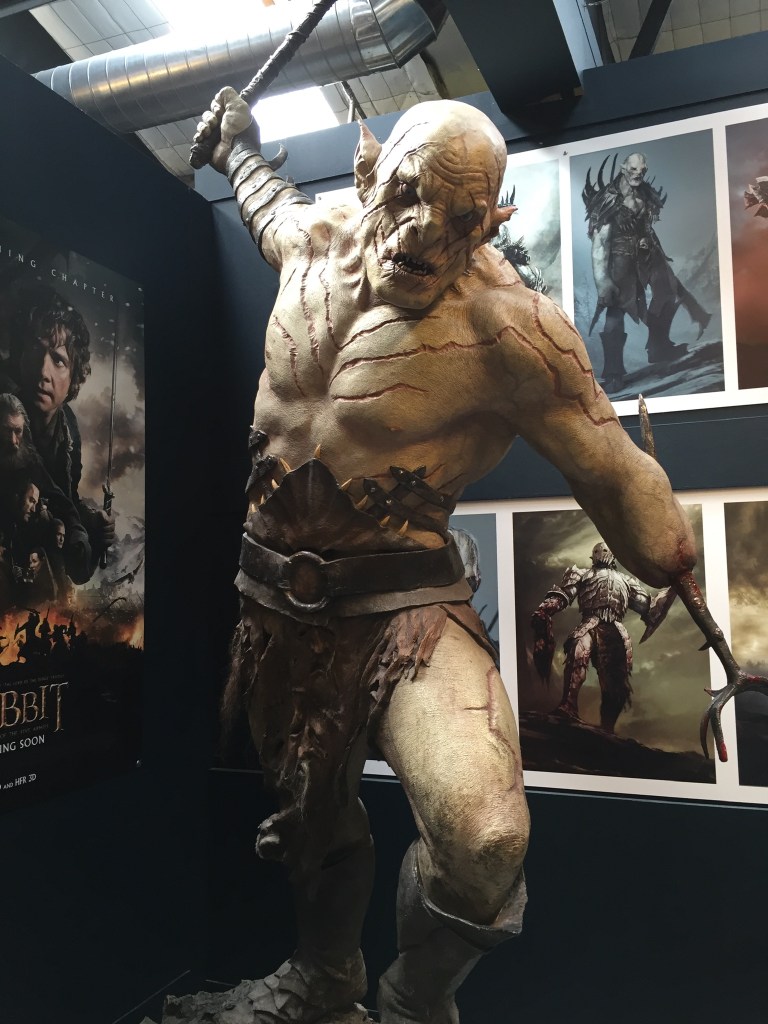
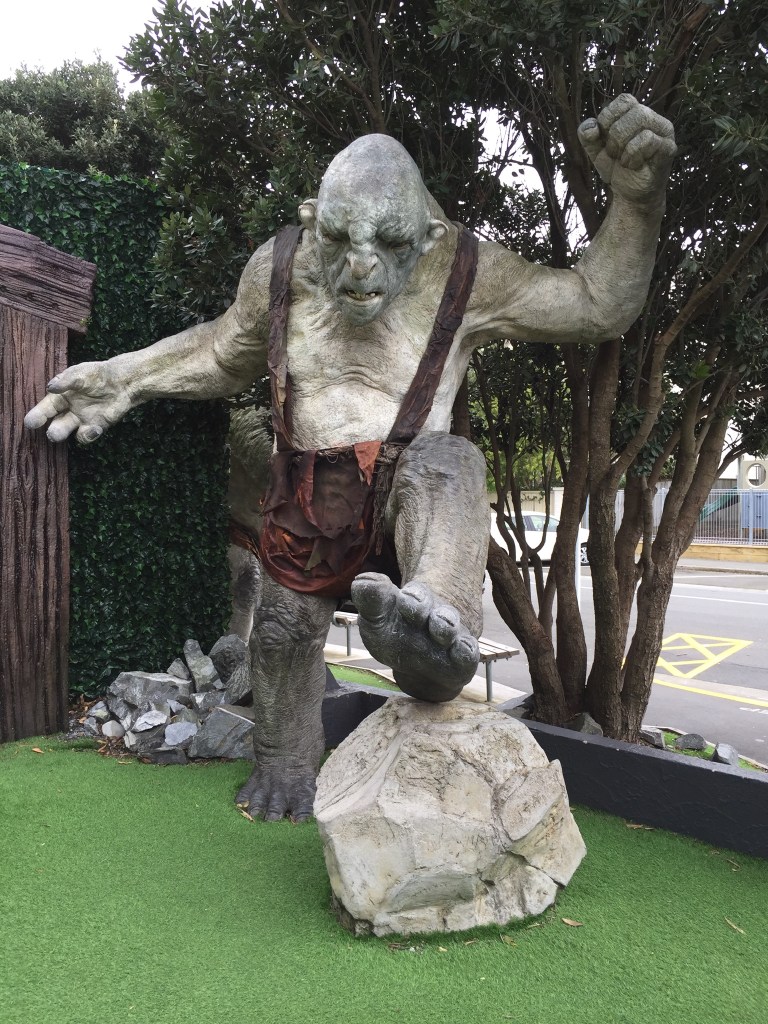
At the end of the tour we ended up in the shop where there were souvenirs at the normal vastly inflated prices, none of which interested me. Outside a young Chinese woman asked me to video her beside one of the models and handed me her iPhone. I explained it would be a boring video if she just stood beside the model but she started talking in Mandarin. When I handed back the phone I asked what she had said and she explained that it was the 70th birthday of the Republic of Chinese and she was wishing happy birthday to people back home. I asked if that was good, she looked a little startled and said that it was. So sad….
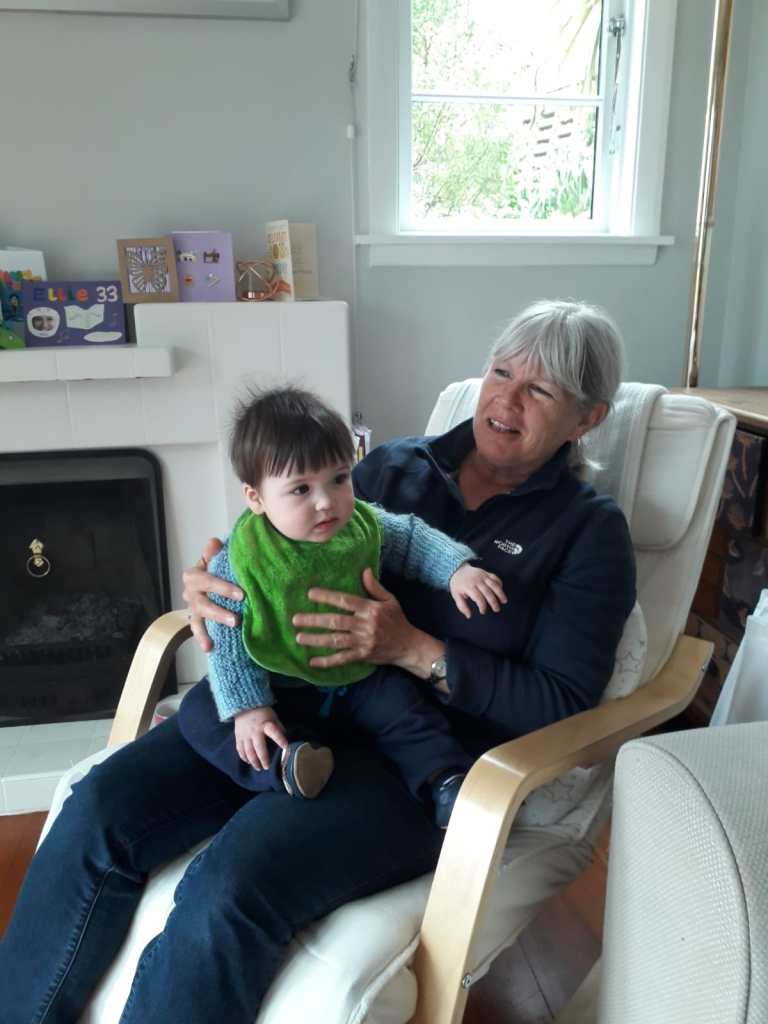
I had arranged to meet Ellie, the daughter of my friend Angie, who got engaged, married, emigrated to NZ and had a baby all very quickly. She and her husband have been living in Miramar, he (Peter) teaches at the University and Ellie has just started back working part time as a nurse in a hospice in a teaching capacity. Their son, Isaac, is 11 months old absolutely gorgeous and happy. I had met Ellie very briefly once before in Wales and this time we met at the lovely retro cinema, Roxy, which was nearly demolished but saved by Peter Jackson. We had some lunch there and she then drove me to their house which can be reached by over 120 steps down, not easy going back up! It was lovely to have this link back with home even though I probably won’t see them again.

I took a bus back and packed my bags. I’m very sad to have to leave Wellington as there are still lots of things I’d like to see and lots of walking still to do. Well, I figure, it’s always a good idea to leave things to do just in case I should return. Also sad to leave the house and family where I had very much felt included. But, as ever, there are more adventures and experiences to come which is what spurs me on.
 NeverSayNeverNomad
Thanks Sheryl. Very interesting . I wish I’d been there with you enjoying all those things and places with you. The Textile place looked fascinating and the Place where all the props were made. All in my line. Wonderful views from the island and the dog Nora in the woods. Glad you’re having a great time. I know what you mean about being a tourist all the time and not getting to know people, but good to have hosts like Harriet and co. I wish you all the best for the next blog. beautiful photos ! Sorry I missed you yesterday. Mags x
LikeLike
Glad you’ve got back into the blog Mags. The textiles place was a show and was brilliant. Sorry you weren’t with me. Sheryl x
LikeLike